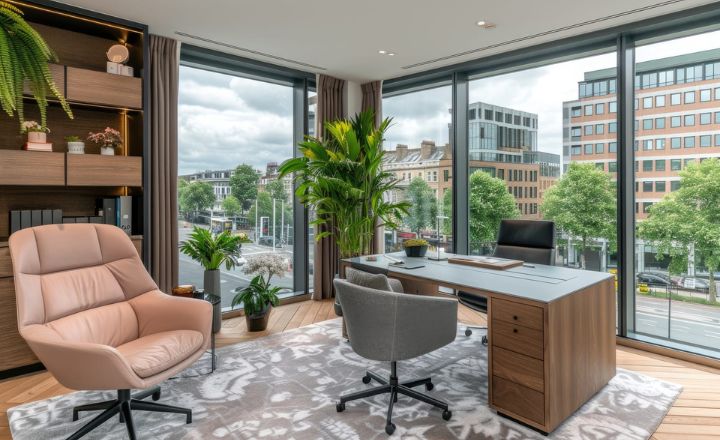
Discover the ideal number of recessed lights for any room with this guide. Learn how to balance aesthetics, functionality, and energy efficiency using LED can lights.
From calculating lumens to spacing guidelines, we’ll cover key factors to create a well-lit space tailored to your needs.

Table Of Contents
Understanding Recessed Lighting Basics
Recessed lighting, often called can lights, is a sleek, modern solution for illuminating homes. These fixtures are installed into the ceiling, providing a clean, unobtrusive look that blends seamlessly with any decor.
They’re versatile, used in kitchens, living rooms, bedrooms, and bathrooms, offering both ambient and task lighting. LED can lights are particularly popular due to their energy efficiency, longevity, and bright, customizable output.
To determine how many can lights per room, you need to consider room size, ceiling height, and lighting purpose.
The first step is understanding lumens, the measure of light output.
A typical living space requires 10-20 lumens per square foot for ambient lighting, while task-oriented areas like kitchens need 30-40 lumens per square foot. For example, a 200-square-foot living room might need 2,000-4,000 lumens total.
Dividing this by the lumen output of your chosen LED bulb (e.g., 800 lumens per bulb) helps estimate the number of fixtures needed. Additionally, ceiling height impacts light distribution—higher ceilings may require more or brighter lights.
Spacing is another critical factor. Can lights are typically placed 4-6 feet apart, depending on ceiling height and beam angle. For instance, 4-inch can lights with a 60-degree beam angle work well spaced 4 feet apart in an 8-foot ceiling.
| Preview | Product | |
|---|---|---|

|
evelor 6-Pack A19 LED Light Bulbs,60 Watt... | Show Price |

|
LED Light Bulbs, 100 Watt Equivalent A19, 13W... | Show Price |

|
Linkind Smart Light Bulbs, Smart Bulb that... | Show Price |

|
DEGNJU A19 LED Light Bulbs, 60 Watt... | Show Price |
|
Sylvania ECO LED Light Bulb, A19 60W... | Show Price |

|
Govee LED Smart Light Bulbs, 1000LM Color... | Show Price |
Larger rooms or those with vaulted ceilings may need adjustable gimbal trims to direct light effectively. Always align fixtures symmetrically to maintain visual harmony and avoid shadowy corners.
- Best Ceiling Light for Home Office
- Best Light for Computer Desk
- Best Book Light for Reading in Bed at Night
- Best Color Light to Wake Up To
Calculating the Number of Can Lights Needed
To calculate how many can lights per room, use a simple formula based on room dimensions and lighting needs. Start by measuring the room’s square footage (length x width). Then, determine the desired lumens per square foot based on the room’s function:
- Living rooms and bedrooms: 10-20 lumens per square foot.
- Kitchens and workspaces: 30-40 lumens per square foot.
- Bathrooms: 20-30 lumens per square foot.
For a 150-square-foot bedroom, you’d need 1,500-3,000 lumens. If each LED can light produces 800 lumens, you’d require 2-4 fixtures. However, this is a starting point—adjust based on ceiling height and layout. For 9-foot or higher ceilings, increase lumens by 10-20% or add an extra fixture to compensate for light dispersion.
Next, consider spacing guidelines.
A common rule is to divide the ceiling height by two to determine spacing. For an 8-foot ceiling, place lights 4 feet apart. For a 10-foot ceiling, use 5-foot spacing. Map out placements on a grid, ensuring even coverage. For example, a 12×12-foot room (144 square feet) with an 8-foot ceiling might need 4-6 can lights, arranged in a 2×3 grid, spaced 4 feet apart.
Task-specific areas, like kitchen islands or reading nooks, may require additional fixtures. Use narrower beam angles (e.g., 30-45 degrees) for focused task lighting. In contrast, wide beam angles (60-90 degrees) suit ambient lighting.
Dimmable LED can lights add flexibility, letting you adjust brightness for different moods or activities. Always consult local building codes, as some jurisdictions limit the number of fixtures per circuit for safety.
Design and Aesthetic Considerations
Beyond functionality, can lights enhance a room’s aesthetic. Their minimalist design complements modern, transitional, or traditional interiors. However, poor placement or overuse can make a space feel sterile or cluttered.
To strike the right balance, consider the room’s purpose and existing decor. For instance, in a cozy bedroom, fewer lights with warm-toned LEDs (2700K-3000K) create a relaxing ambiance. In a kitchen, cooler tones (3500K-4000K) and more fixtures ensure crisp, functional illumination.
Trim style also matters. Baffle trims reduce glare, ideal for living rooms, while reflector trims maximize brightness for task areas. Adjustable or eyeball trims allow you to highlight artwork or architectural features.
In open-plan spaces, align can lights with furniture layouts to define zones, like a dining area or seating nook. Avoid placing lights directly above seating to prevent harsh shadows on faces.
Energy efficiency is a key consideration. LED can lights use 75-80% less energy than incandescent bulbs and last up to 25,000-50,000 hours. Pairing them with smart controls, like motion sensors or timers, further reduces energy costs.
Solar-powered options, while less common for indoor recessed lighting, are emerging for eco-conscious homeowners. Check for ENERGY STAR certification to ensure high efficiency and quality.
In larger rooms, layer lighting for depth. Combine can lights with pendants, chandeliers, or wall sconces to avoid a flat, overly uniform look.
For example, in a 20×20-foot living room, 8-10 can lights might provide ambient light, supplemented by floor lamps for reading corners. Test layouts with a mock-up or consult a lighting designer to visualize the effect before installation.
FAQs About Can Lights in Rooms
How do I know if I’m using too many can lights?
A: Overlighting can make a room feel harsh or clinical. If the space feels overly bright or fixtures are closer than 3 feet apart, you may have too many. Aim for even spacing and adequate lumens without exceeding 20-30% above the recommended range for the room’s function.
Can I mix different types of lighting with can lights?
A: Yes, layering can lights with pendants, sconces, or floor lamps creates a balanced, dynamic look. Use can lights for ambient lighting and add accent or task lighting with other fixtures to highlight specific areas or decor.
Are LED can lights worth the investment?
Absolutely. LED can lights are energy-efficient, long-lasting, and versatile, offering customizable brightness and color temperatures. They reduce electricity bills and maintenance costs, making them a cost-effective choice for modern homes.
How do ceiling height and room shape affect can light placement?
Higher ceilings require more lumens or fixtures due to light dispersion. Irregularly shaped rooms may need strategic placement to avoid dark spots. Use adjustable trims or wider beam angles to ensure even coverage in challenging spaces.
Conclusion
Determining how many can lights per room involves balancing room size, lighting needs, and design preferences. By calculating lumens, spacing fixtures evenly, and choosing energy-efficient LED options, you can create a functional and inviting space.
Consider layering with other lighting types and selecting appropriate trims to enhance aesthetics.
With careful planning, recessed lighting can transform any room into a beautifully illuminated haven tailored to your lifestyle.