
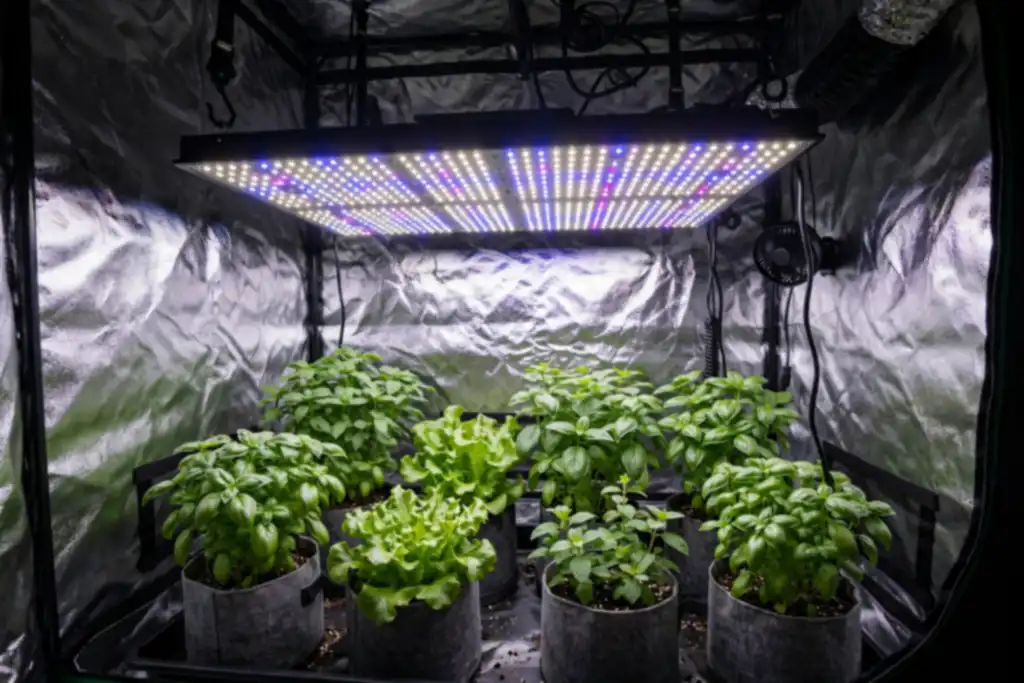
Seedlings stretch toward the window in late winter, and a 1000 watt LED grow light becomes the difference between weak starts and strong transplants. Gardeners fire up indoor setups before the last frost.
New growers often buy by wattage alone and end up with hot spots, bleached leaves, or weak coverage at the edges. Our research points readers toward the best 1000 watt led grow light for their space.
Horticulturists recommend matching light spread to canopy size, checking PPFD at real hanging heights, and planning for heat output. We compared diode quality, coverage area, dimming control, and owner reports on noise and reliability to pick the best watt led grow light for indoor gardens.
Top 3 Picks for Best 1000 Watt Led Grow Light

AGLEX 1000W LED Grow
- ▸Full spectrum with UV and IR
- ▸Daisy chain up to 100 lights
- ▸Fanless aluminum heat dissipation

1000W LED Grow Light
- ▸2.8 umol/J efficiency rating
- ▸3160 LEDs across three spectra
- ▸Daisy chain up to 25 lights

Spider Farmer G1000W Commercial
- ▸Eight bar uniform coverage
- ▸Detachable driver and app control
- ▸5 year warranty coverage
10 Best 1000 Watt Led Grow Light
Our Top 1000 Watt Led Grow Light Reviewed
1. AGLEX 1000W LED Grow – Wide 6×6 Coverage
Wide 6×6 Coverage
PROS
- ✓Very wide 6x6ft coverage
- ✓Full spectrum includes UV and IR
- ✓Daisy chain up to 100 lights
- ✓Fanless and quiet operation
- ✓3 year manufacturer warranty
CONS
- ✗Large footprint needs a big space
- ✗Heavy draw at full power
AGLEX 1000W LED Grow Lights, Full Spectrum…
- 3000K, 5000K, blue, red, IR, UV
- Daisy chain up to 100 units
- 3400 LEDs with 1693 PPFD
- Fanless aluminum heat dissipation
- 6x6ft core coverage area
The AGLEX 1000W LED Grow is the widest spreader in this group, rated for 6x6ft of core coverage. That matters at this wattage because a big fixture throws a lot of light, and you want it landing on the canopy rather than the tent walls. The bar style layout and foldable frame make it easier to hang and store between runs. A 3 year manufacturer warranty backs it up.
Its spectrum is unusually complete for the price tier. You get 3000K warm, 5000K white, 460nm blue, 660nm red, 730nm IR and 405nm UV, which covers vegetative and flowering stages without swapping fixtures. The 3400 SMD LEDs push 1693 PPFD, and the company compares the output to a traditional 2000W HPS or MH while drawing 1000W. Growers running commercial rows will appreciate the daisy chain, which links up to 100 units on one control.
Heat is handled without fans. Aluminum surfaces dissipate the heat quietly, which suits sealed rooms and anyone sensitive to noise. The 0 to 100 percent dimming lets you pull intensity back for clones and seedlings. For greenhouses, grow tents, racks and vertical farming, this is a flexible choice, though the large footprint means you need the space to justify it.
Best for Wide Canopy Rooms
This suits growers with large tents, greenhouses or commercial rows who want one fixture to cover a broad area. The 6x6ft core coverage and bar design spread light evenly across a wide canopy.
It also fits anyone running multiple lights who wants simple control. The daisy chain handles up to 100 units, and the full spectrum with UV and IR means fewer fixture changes between stages.
Not Ideal for Small Tents
Skip this if your grow space is small. A fixture rated for 6x6ft will waste light outside a compact tent and can overwhelm seedlings without careful dimming.
Growers who want app control or scheduling should look elsewhere. This light relies on manual dimming and daisy chain control rather than smart features.
2. 1000W LED Grow Light – High Efficiency Output
High Efficiency Output
PROS
- ✓High 2.8 umol/J efficiency
- ✓Balanced white and red spectrum
- ✓Daisy chain up to 25 lights
- ✓Foldable with no assembly
- ✓Aluminum heat sink cooling
CONS
- ✗No UV or IR in the spectrum
- ✗Smaller footprint limits spread
1000W LED Grow Light Full Spectrum Dimmable…
- 2.8 umol/J PPE efficiency
- 3160 LEDs total
- 6500K, 3000K and 660nm chips
- Daisy chain up to 25 lights
- Foldable design, no assembly
The 1000W LED Grow Light leads on efficiency, with a 2.8 umol/J PPE figure and a claimed max yield of 2.5g per watt. At this wattage, efficiency is the number that decides your power bill, so that rating is the main reason we rank it here. The smaller footprint also helps crop quality by concentrating output. It arrives foldable, so there is no assembly before hanging.
The diode mix is deliberate. You get 1320 high efficiency 6500K white LEDs, 1680 warm 3000K LEDs and 160 deep red 660nm chips, 3160 in total. That balance of white and red supports germination through to flowering and fruiting. Dimming runs from 0 to 100 percent, and the daisy chain links up to 25 lights so a room can be adjusted together.
Cooling uses an aluminum heat sink on the back plus an open design that encourages air circulation, which keeps ambient heat down in tight spaces. The retractable hanger and foldable body make storage simple. It fits 6×6 grow tents, though the compact build means it suits smaller footprints better than wide commercial rows.
Best for Energy Conscious Growers
This is a strong pick for growers watching electricity costs. The 2.8 umol/J efficiency and claimed yield per watt make it cost effective over a full cycle.
It also suits tent growers who want a simple setup. The foldable body needs no assembly, the retractable hanger speeds hanging, and the daisy chain keeps multiple lights in sync.
Not Ideal for Full Spectrum Purists
Growers who want UV and IR supplementation should skip it. The spectrum stops at 660nm deep red, so there is no ultraviolet or far red output built in.
Anyone lighting a very wide room may find the footprint limiting. It is built around a compact 6×6 tent rather than long commercial rows.
3. Spider Farmer G1000W Commercial – App Controlled Design
App Controlled Design
PROS
- ✓Uniform 8 bar light spread
- ✓Detachable driver moves heat away
- ✓App schedules and sunrise simulation
- ✓Daisy chain up to 50 lights
- ✓5 year warranty with U.S. support
CONS
- ✗Highest cost of the three
- ✗Scheduling depends on the app
Spider Farmer G1000W Commercial 1000W LED Grow…
- 8 bar design for uniformity
- Bridgelux diodes with Osram red
- Detachable driver
- App with schedules and sunrise
- Supports CO2 growing environments
The Spider Farmer G1000W Commercial is the most controllable fixture here. An 8 bar design pushes light to the edges for uniform distribution, and Bridgelux diodes with Osram red deliver strong output across a 5×5 tent or rack. The detachable driver can be moved outside the grow space, which keeps heat away from the canopy. A 5 year warranty and U.S. service center add long term confidence.
Smart features set it apart. The Spider Farmer App handles custom schedules, sunrise and sunset simulation and remote brightness changes from a phone. Dimming daisy chains connect up to 50 lights for commercial rooms and vertical farming racks. It also supports CO2 enriched growing environments, which matters for sealed rooms running higher levels.
Setup is quick. The foldable frame unfolds and plugs in with no installation, saving labor on large installs. Efficiency is rated at 2.9, the highest figure in this group. The trade off is price positioning at the top of the range, and app control means relying on a phone and a stable connection for scheduling.
Best for Connected Commercial Rooms
This fits commercial growers and serious home growers who want remote control. The app handles schedules and sunrise simulation, and daisy chaining up to 50 lights simplifies room wide management.
Sealed CO2 rooms are a natural match. The detachable driver keeps heat out of the space, and the 8 bar design spreads light evenly across 5×5 tents and racks.
Not Ideal for Budget Setups
Budget focused growers should look at the cheaper options here. This fixture carries the highest cost and its smart features only pay off if you use them.
Anyone who prefers simple analog control may find the app reliance unnecessary. Manual dimming exists, but scheduling and remote features need the phone app.
4. 1000W LED Grow Foldable – Foldable Bar Coverage
Foldable Bar Coverage

PROS
- ✓Wide 4×6 ft core coverage
- ✓Full spectrum includes UV and IR
- ✓Dimmable across growth stages
- ✓Daisy chain controls over 100 lights
- ✓Foldable 10-bar design aids transport
CONS
- ✗2-year warranty is shorter than some rivals
- ✗Large bar fixture needs generous headroom
1000W LED Grow Light for Indoor Plants…
- 3400 high-efficiency LEDs built in
- Full spectrum with UV and IR
- Built-in dimming for each stage
- RJ12 daisy chain over 100 lights
- 180 degree foldable 10-bar design
The 1000W LED Grow Foldable is built around a 10-bar fixture that folds to 180 degrees, which makes it easier to move and mount in a fixed tent or greenhouse layout. Its 3400 LEDs spread light across a 4×6 ft core area, so the coverage suits a mid-sized footprint rather than a single corner plant. We see the foldable aluminum body as the practical draw here, since it helps with airflow and heat dissipation in tighter rooms.
The spectrum runs from 3000K and 5000K whites through 460nm blue, 660nm red, 405nm UV and 730nm IR, giving you stage-by-stage flexibility. Dimming lets you pull intensity down for seedlings and push it up through veg and flowering without swapping fixtures. For anyone running several lights, the RJ12 daisy chain can link and control over 100 units from the first one, which simplifies scheduling in larger hydroponic or commercial setups.
Owners of bar-style fixtures like this tend to value even canopy spread and manageable heat, and the aluminum construction and 10-bar layout point in that direction. The 2-year warranty is shorter than some commercial rivals, so weigh that against the foldable design and wide coverage. It fits growers who want a wide footprint and chain control without stepping up to a premium price tier.
Best for Wide Tent Coverage
This suits growers covering a 4×6 ft area who want a bar fixture with a broad, even spread. The 3400 LEDs and full spectrum with UV and IR support plants from seedling through flowering.
It also works for multi-light rooms, since the RJ12 daisy chain can control over 100 units from one point. The foldable design helps when space is tight or the light needs to move between spots.
Not Ideal for Small Single-Plant Grows
A 4×6 ft core coverage fixture is more light than a single small plant or a compact tent needs. You would be paying for spread you cannot use.
Growers who want the longest possible warranty should compare the 2-year term against commercial options before committing.
5. Spider Farmer Commercial LED – App-Controlled Efficiency
App-Controlled Efficiency

PROS
- ✓High 2940 umol/s output
- ✓App control with schedules and simulation
- ✓Detachable driver moves heat away
- ✓Uniform bar-style canopy coverage
- ✓5-year warranty with local repair centers
CONS
- ✗App setup can take patience
- ✗Premium fixture at a higher cost tier
Spider Farmer SE1000W Commercial LED Grow Light…
- Bridgelux diodes, 2940 umol/s output
- Bar style for uniform canopy coverage
- App control with sunrise simulation
- Digital display dimming box
- Detachable driver, 5-year coverage
The Spider Farmer Commercial LED is the most spec-heavy option here, with Bridgelux diodes rated at 2940 umol/s from 1000W. Its bar layout is aimed at uniform full-canopy coverage in 5×5 tents and vertical racks, and the detachable driver lets you move heat away from the canopy. We rate that driver placement as a real advantage in sealed rooms where heat builds fast.
Control is where this fixture separates itself. The Spider Farmer App handles custom schedules, sunrise and sunset simulation and remote brightness, and a digital display dimming box gives a manual dial for seedlings, veg and flowering. Owners commonly report liking the app for adjusting light while away, though some find setup takes a little patience.
The tuned spectrum leans on 437nm blue and 50 to 55 percent deep red at 660-665nm, backed by 2800-3000K and 4800-5000K whites. A 5-year warranty with local repair centers in the USA, Canada and UK adds long-term confidence. It suits commercial and serious home growers who want app control and high output rather than the lowest entry price.
Best for App-Controlled Commercial Rooms
This fits 5×5 tents and vertical rack systems where uniform coverage and high output matter. The bar design and detachable driver help manage heat in sealed or stacked grows.
Growers who want remote scheduling and sunrise simulation will get the most from the app. The 5-year coverage with local repair centers also suits long commercial cycles.
Not Ideal for Budget Starter Setups
A first-time grower with a small tent may not need app control, a detachable driver or this output level. The extra capability adds cost without matching a simple setup.
Anyone who prefers a plain dial and no phone dependency should look at simpler dimming fixtures instead.
6. 1000w LED Grow Growing – Compact Energy Saver
Compact Energy Saver

PROS
- ✓Low actual 100W power draw
- ✓Quiet fanless heat dissipation
- ✓Full spectrum for veg and flower
- ✓Fireproof PC cover and aluminum back
- ✓Simple rope installation
CONS
- ✗Small footprint suits only compact grows
- ✗Not a true 1000W output fixture
1000w LED Grow Light for Indoor Plants…
- Actual power 100W equals 1000W HPS
- Full spectrum white, blue and red
- 660nm red for flowering and yield
- 430nm blue for root and leaf growth
- Fireproof PC cover, aluminum back
The 1000w LED Grow Growing is the smallest and simplest fixture in this group, drawing an actual 100W while marketed as a 1000W HPS equivalent. That lower draw makes it a fit for a single small tent or a compact hydroponic shelf where heat and power use are concerns. We see it as an entry-level panel rather than a room-filling bar light.
Its spectrum covers white, blue and red, with 660nm red aimed at flowering and 430nm blue for root and leaf development. A fireproof optical grade PC cover and aluminum back cover handle the build, and the six-sided passive structure dissipates heat without a fan, so there is no noise. Adjustable ropes let you raise or lower it as plants move through stages.
Owners of small panels like this usually value the low running cost and silent operation, and the 100W draw keeps electricity use modest. The 2-year warranty is standard for the class. It suits hobby growers with limited space who want a quiet, low-power light for veg and flower in a small tent.
Best for Small Quiet Grows
This suits hobby growers with a small tent or hydroponic shelf who want low power use and silent operation. The 100W draw keeps running costs modest.
The full spectrum with 660nm red and 430nm blue covers veg and flower, and the adjustable ropes make height changes easy between stages.
Not Ideal for Large Canopies
A 100W panel cannot fill a 4×6 ft or 5×5 ft canopy the way the bar fixtures here can. Large rooms or multi-plant setups will need more units.
Growers expecting true 1000W output should note the actual draw is 100W, so it is a replacement for HPS in small spaces only.
7. Mars Hydro FC-E1000W LED – Foldable Value Full Spectrum
Foldable Value Full Spectrum

PROS
- ✓Strong 2.8 umol/J efficiency for the price
- ✓Osram red diodes boost flowering output
- ✓Foldable frame speeds up hanging
- ✓Even spread across large footprints
- ✓App control with optional controller
CONS
- ✗Smart controller sold separately
- ✗5x5ft coverage is generous at full power
Mars Hydro FC-E1000W 5×5 LED Grow Light…
- 2.8 umol/J PPE, 2800 umol/J PPF
- Max coverage 5x5ft, core 4x4ft
- Foldable frame for simple setup
- Osram CSSRM6.24 at 4.48 umol/J
- Smart control via iConnectu and app
For a light in this power class, efficiency and coverage spread matter most, and the Mars Hydro FC-E1000W LED addresses both with Bridgelux 2835 diodes and a 2.8 umol/J PPE rating. The 2800 umol/J PPF figure puts it in a strong position for a 5x5ft max footprint or a tighter 4x4ft core footprint.
Owners commonly report even output across the canopy, which matters in a tent this size because hot spots and dark corners are the usual failure points at high wattage.
The upgraded Osram red spectrum is the detail we weigh heavily for flowering. The Osram CSSRM6.24 runs at 4.48 umol/J and pushes deep red output, so the light leans toward bloom performance without the premium price tag the brand attaches to its top tier fixtures. The bar structure also spreads heat rather than concentrating it, which helps in sealed rooms where driver and diode heat add up quickly.
Setup is simpler than most fixtures in this class. The foldable frame means you hang it and connect the driver, with no bar assembly to work through. Smart control comes through the iConnectu, Controller or iHub-Pro, sold separately, for remote monitoring, scheduling and dimming in the MARS HYDRO App. Buyers should budget for that controller if they want app features, since it is not included.
In our research, this light suits growers who want strong flowering output and a wide footprint without paying top tier prices. The trade offs are the separate controller cost and the fact that a 5x5ft coverage claim is generous at full power. Plan ventilation around the driver and treat 4x4ft as the honest flowering footprint.
Best for Value Flowering Rooms
This fixture fits growers running a 4x4ft or 5x5ft flowering space who want high output without premium pricing. The Osram red spectrum and 2.8 umol/J efficiency make it a sensible pick for bloom focused rooms where cost per umol matters.
It also suits people who value easy installation. The foldable frame and bar layout cut setup time, and the optional app control adds scheduling and dimming for those willing to buy the controller.
Not Ideal for Tight Budgets
Growers who want full smart features out of the box should skip it. The iConnectu, Controller or iHub-Pro is sold separately, so app scheduling and dimming add to the total cost.
Anyone expecting true 5x5ft flowering coverage at full power may be disappointed. We would treat 4x4ft as the realistic flowering footprint and plan extraction around the driver heat.
8. LED Grow Lights – High Efficiency Full Spectrum
High Efficiency Full Spectrum

PROS
- ✓High 2.8 umol/J efficiency rating
- ✓Silent fanless passive cooling design
- ✓Even coverage for 4×4 and 5×5 spaces
- ✓Daisy chain up to 100 lights
- ✓5-year warranty with US service
CONS
- ✗Heavy fixture at over 36 pounds
- ✗Passive cooling needs good tent airflow
LED Grow Lights for Indoor Plants, Full…
- Full spectrum with 2.8 umol/J efficacy
- Passive cooling, no fans, zero noise
- Precision dimming knob 0 to 100 percent
- RJ11 daisy chain up to 100 lights
- Fits 4×4 flowering and 5×5 veg
The RDJ Bouns LED Grow Lights unit is built around efficiency and even coverage. Its 2.8 umol/J efficacy rating puts it in strong company for this wattage class, and the diode layout is designed to spread PAR evenly to the corners rather than concentrating it in the middle. For a 4×4 flowering space or a 5×5 veg space, that uniformity matters because hot spots and edge drop off are the usual weak points at this power level.
Cooling is handled passively with 6063 aviation-grade aluminum and no fans at all. That means zero noise and fewer moving parts to fail, which matters in a small grow room where fan noise adds up. The trade-off is that airflow around the fixture still matters, so we suggest keeping adequate circulation in the tent. Owner feedback commonly mentions the build feeling solid and the heat output being manageable compared with fan-cooled units.
Control is straightforward. A 0 to 100 percent dimming knob lets you dial intensity down for seedlings and clones, then ramp up through veg and flower. The RJ1 daisy chain ports let you link up to 100 fixtures and run them from one controller, and the light works with the RDJ Smart Hub and most third-party controllers. A 5-year warranty with US-based support backs the purchase, which matters for a fixture this size.
Best for Everyday Use
This light suits growers running a 4×4 flowering tent or a 5×5 veg space who want even canopy coverage without hot spots. The dimming knob and daisy chain ports make it a practical fit for anyone planning to scale up or automate control later.
It also makes sense for people who value silence and fewer failure points. With no fans, there is nothing to wear out or rattle, and the 5-year warranty adds peace of mind for a long-term setup.
Not Ideal for Every Rider
Skip this if your grow space is small or your ceiling height is limited. At over 36 pounds and roughly 46 by 43 inches, it needs a sturdy hanging setup and room to spread out.
Growers without decent air circulation in the tent should also think twice. Passive cooling relies on airflow around the fixture, so a sealed or poorly ventilated room will not get the best from it.
9. SAMPHON 600W LED Grow – Foldable Bar Coverage
Foldable Bar Coverage
PROS
- ✓Even bar style canopy coverage
- ✓Full range dimming for all stages
- ✓Daisy chain links multiple units
- ✓Fanless and quiet operation
- ✓Foldable for quick installation
CONS
- ✗600W class output, not true 1000W
- ✗One year warranty is short
SAMPHON 600W LED Grow Lights for Indoor…
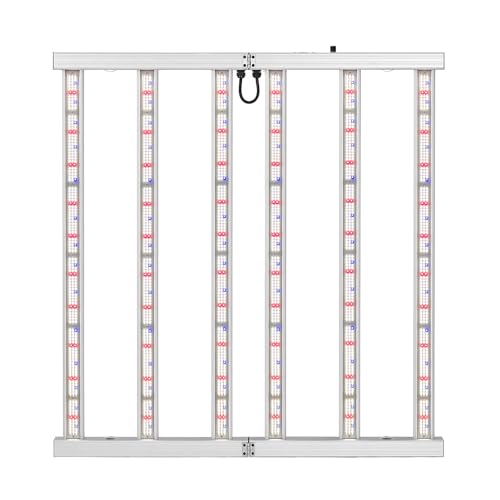
- 33.5 inch six bar design
- 4x4ft coverage area
- 0 to 100 percent dimming
- Daisy chain multiple lights
- Foldable plug and play setup
The SAMPHON 600W LED Grow takes a bar style approach to canopy lighting. Six elongated bars spread light across a 4x4ft area, which is the kind of even coverage that matters when plants sit at different heights and edges of a tent. Uniform spread helps reduce the hot spots and shadowed corners that single panel lights often leave behind.
Dimming runs from 0 to 100 percent, so the same fixture can serve seedlings through flowering without blasting young plants. The daisy chain function lets growers link multiple units, which suits anyone running a longer room or several tents on one circuit. Six lightweight aluminum bars handle heat without a fan, so there is no noise and no extra cooling gear to buy.
The foldable design means it arrives ready to hang, which cuts setup time for personal growers and reduces labor for commercial setups. At 33.46 inches square and 10.25 pounds, it fits standard 4×4 tents without much fuss. A one year warranty backs it, and the fanless build keeps the environment quiet for anyone growing near living spaces.
Best for Even Canopy Spread
This suits growers running a 4×4 tent who want light spread evenly across the whole canopy rather than a strong center point. The six bars and foldable frame make it simple to hang and adjust as plants grow.
Anyone expanding to multiple lights will appreciate the daisy chain and dimming controls. The fanless aluminum build also fits quiet setups where noise matters.
Not Ideal for High Output Demands
Growers chasing maximum intensity for large, heavy flowering rooms should look at higher output fixtures. This model is rated in the 600W class despite the listing title, so it covers a 4×4 area rather than a bigger footprint.
People who want long warranty protection may prefer another option, since coverage here is one year only.
10. AC Infinity IONFRAME EVO10 – Even Bar Coverage
Even Bar Coverage

PROS
- ✓High efficiency LM301H EVO diodes
- ✓Even bar style light spread
- ✓Built in schedule and dimming control
- ✓Removable driver moves heat away
- ✓Daisy chaining for large rooms
CONS
- ✗Heavy at around 50 pounds
- ✗2 year warranty is on the short side
AC Infinity IONFRAME EVO10, 1000W Samsung EVO…
- Samsung LM301H EVO chips at 3.14 µmol/J
- Schedule controls and sunrise sunset dimming
- Bar fixture with algorithmically spaced diodes
- Removable driver for heat balance
- Daisy chain up to 80 lights
The AC Infinity IONFRAME EVO10 is a bar style fixture built around Samsung LM301H EVO diodes rated at 3.14 µmol/J. In our research, that efficiency figure sits at the top of the LM301 family, which matters in a high output room where every watt of heat and power counts. The 3710 diodes are spaced algorithmically across the bars, and the design aims to spread light evenly rather than concentrate it under a hotspot.
Coverage is listed at 7 x 7 ft for veg and 6 x 6 ft for flower, with 2146 PPFD at full power. The bar layout helps with deep canopy penetration, so taller plants get light lower down instead of just at the tips. Schedule controls, sunrise and sunset dimming and 10 brightness levels are built in, and the UIS platform allows WiFi app control for growers running a connected room.
The passive cooling driver is removable, which lets you move heat away from the canopy, and daisy chaining supports up to 80 lights for larger setups. Owners commonly report even spread and solid build quality, though the 50 pound weight and 44 inch frame mean you need sturdy hanging hardware. The 2 year warranty is shorter than some rivals, so mounting and ventilation deserve planning before purchase.
Best for Even Canopy Coverage
This fixture suits growers running a 5×5 or 6×6 flower space who want light spread evenly across the canopy rather than a strong center hotspot. The bar design and algorithmically spaced diodes make it a reasonable fit for scrog and sea of green setups where uniform intensity matters.
It also fits connected grow rooms. Schedule controls, sunrise and sunset dimming and UIS app compatibility mean you can tie it into a controller system, and daisy chaining helps when one room holds many lights.
Not Ideal for Low Ceilings
Growers with low ceilings should think carefully. The 44 inch square frame and 50 pound weight demand solid hanging support, and the high output needs enough headroom to avoid stressing plants at the top of the canopy.
Anyone wanting a long warranty should compare options first. At 2 years, coverage is shorter than some competing fixtures, so budget minded buyers may prefer a longer term guarantee.
How to Choose the Best 1000 Watt Led Grow Light
Real Wattage and What a 1000 Watt Rating Actually Means
The first thing we check on any watt led grow light is whether the number refers to true draw from the wall or an equivalent marketing figure. Many fixtures sold as 1000 watt replacements pull far less power, often in the 100 to 300 watt range, and expect you to compare them to older high intensity discharge lamps.
A true 1000 watt LED bar typically draws close to 1000 watts at the plug, which changes everything about heat, circuit load and coverage.
For a real 1000 watt fixture, plan on a dedicated 15 or 20 amp circuit. At full power the light alone can pull around 8 to 9 amps at 120 volts, so sharing that circuit with fans, pumps and heaters is asking for a tripped breaker. Owners of high draw units commonly report that a separate circuit solves most of their electrical headaches.
We compared listed power draw, efficiency figures and owner reports on heat output when building this section. Our advice is simple. Buy the true wattage you need, not a label that promises more than the plug delivers.
Light Intensity, Spectrum and What the Numbers Tell You
Intensity is usually described as PPFD, the amount of usable light that lands on your canopy, measured in micromoles per square meter per second. A genuine 1000 watt LED bar in a 4 by 4 or 5 by 5 foot tent can push PPFD into the 800 to 1500 range at canopy level depending on hanging height and dimming. Those figures matter more than any wattage badge on the box.
Spectrum matters too. Most modern 1000 watt fixtures run full spectrum white diodes with added red, which suits both vegetative growth and flowering without swapping lamps. Some units offer tunable channels so you can dial red up during bloom, and owners often report that dimming and spectrum control help them manage stretch and heat in tight spaces.
Our research team compared published PPFD maps and spectrum charts rather than trusting single point readings. A light with an honest, even spread across the canopy is worth more than one with a bright hotspot in the centre and weak edges.
Bar Style, Frame Shape and How the Fixture Fits Your Space
Most true 1000 watt LEDs come as long bar fixtures, sometimes called strip or bar lights, with diodes spread across several rails. This shape spreads light and heat more evenly than a single central panel, which is a real advantage in a 4 by 4 or 5 by 5 footprint. Foldable frames, like those on several commercial style units, make installation and storage easier in low ceilings.
Panel and board designs still exist at this power level, but they tend to concentrate heat in one area and cast a narrower beam. For a watt led grow light, bar geometry is usually the better fit because it keeps the diodes closer to the canopy without burning the centre of the tent.
We looked at frame dimensions, folded sizes and mounting options across the products in this guide. Check the actual footprint the fixture covers and the clearance you have above the plants before you commit.
Heat, Ventilation and Room Conditions
A 1000 watt LED still produces meaningful heat, even though it runs cooler than the equivalent HID lamp. Expect the fixture to raise temperatures in a sealed tent, and plan extraction and circulation around that. Owners commonly report that a 6 inch inline fan and oscillating fans keep things stable, while smaller setups struggle in summer.
Driver placement matters here. Removable or remote drivers let you move the heat source outside the grow space, which is a big help in small rooms or warm climates. Units with drivers mounted on the bars are simpler to hang but dump all their heat into the canopy zone.
We compared driver designs and owner feedback on temperature swings when researching this category. If your room already runs warm, a fixture with remote drivers or strong dimming headroom gives you more control.
Dimming, Controllers and Compatibility with Your Gear
Dimming is one of the most useful features on a watt led grow light. Most units offer a knob or onboard control from around 10 to 100 percent, and some support external controllers for scheduled ramping. Being able to run at 40 or 60 percent during early growth saves power and reduces stress on young plants.
Compatibility with controller ecosystems is worth checking before you buy. Some fixtures work with popular environmental controllers for light scheduling and sunrise style ramps, while others only offer manual dimming. If you already run a controller for fans and humidity, matching the light to that system keeps everything on one schedule.
Our team compared control options and connector types across the range. Owners often say that controller integration was the feature they underestimated until they started using it daily.
Build Quality, Water Resistance and Long Term Care
Look at the diode brand, the driver quality and the housing material. Reputable 1000 watt fixtures use name brand diodes and Mean Well or similarly rated drivers, and they list ingress protection ratings such as IP65 for dust and water resistance. A higher IP rating matters in humid grow rooms where spray and condensation are routine.
Passive heatsinks are the norm at this power level, and that is fine as long as the bars are thick enough to spread heat. Foldable aluminium frames hold up well, but check hinge and connector quality since those are the parts that wear first. Owners report that cleaning dust off the bars every few weeks keeps output steady and prevents hot spots.
We compared warranty terms, housing specs and owner comments on long term reliability when putting this guide together. A light with honest specs and a solid warranty is the safer buy at this wattage.
Matching a 1000 Watt Light to Your Grow and Budget
Think about your space first. A true 1000 watt bar suits a 4 by 4 or 5 by 5 tent or an equivalent open room, and it is overkill for a 2 by 2 or 3 by 3. If your footprint is smaller, dimming the fixture or choosing a lower output model makes more sense than running full power in a cramped space.
Budget should cover the light plus the electrical work, extraction and controller you may need. A cheap 1000 watt unit that forces you to upgrade your circuit or fan is not cheap in the end. We weighed listed specs, owner feedback and expert research rather than sticker price alone.
Our picks in this guide reflect what the product data and owner reports say about real world performance at this wattage. Match the fixture to your room, your circuit and your controller, and the rest of the setup falls into place.
Our Research Process
We built this shortlist by comparing what each watt led grow light actually promises on paper with what owners say after living with it.
- Protection: We checked safety and build details like waterproof ratings, driver placement and heat management, because a light that runs hot or lets moisture in is a real risk in a grow space.
- Fit: We compared coverage area, hanging height and dimensions against common tent and room sizes, so the light suits the space rather than crowding it.
- Materials: We looked at diode quality, heatsink design and housing construction, since these shape light output and how long a fixture holds up.
- Owner feedback: We read through reviews for repeat complaints, such as flickering, noisy fans, drivers failing early or coverage falling short of the claims.
- Expert guidance: We followed advice from horticultural lighting specialists and experienced indoor growers on matching wattage to canopy size and reading spectrum and efficiency figures.
From there we picked models that balance solid specs with feedback that holds up over time.
FAQs on Best 1000 Watt Led Grow Light
What Should We Check Before Buying a 1000 Watt Led Grow Light for a Small Grow Space?
A 1000 watt led grow light puts out serious intensity, so the first thing we check is the actual wall draw and the recommended coverage area. Many units labelled 1000 watts replace a 1000 watt HPS but draw less from the socket, and the listing should state both figures clearly.
We compare the footprint at different hanging heights, because a light that suits a 4×4 tent will overwhelm a 2×2 closet. Matching the coverage to the space avoids wasted light and heat stress on plants near the edges.
We also look at dimming and spectrum controls, since a 1000 watt led grow light is often more power than a young plant needs. A dimmer lets growers run it lower during veg and raise output in flower, which matters in tight rooms where heat builds fast.
How Much Space Does a 1000 Watt Led Grow Light Actually Cover?
Coverage depends on the diode layout and the optics, not just the wattage number. Most 1000 watt led grow light units we researched are built for flowering a 4×4 to 5×5 area, with veg coverage extending wider because plants tolerate lower intensity. Bar style fixtures spread light more evenly across that footprint, while board style units concentrate it in the centre. We compare the stated flowering footprint against the tent size before recommending anything.
Hanging height changes the picture too. Running the light higher widens the spread but drops intensity at the canopy, and running it low concentrates the beam and risks bleaching. We suggest growers measure the actual grow area first, then pick a fixture whose flowering footprint matches it with a little margin.
Is a 1000 Watt Led Grow Light Safe to Run in a Tent or Spare Room?
Safety starts with the electrical side. A 1000 watt led grow light should carry a recognised certification and come with a grounded plug and quality drivers, because cheap uncertified drivers are a common failure point in owner reports. We check that the circuit can handle the load alongside fans, pumps and heaters, since growers often forget the total draw. Running the light on a dedicated circuit or a properly rated timer reduces the risk of tripped breakers and overheated plugs.
Heat and moisture are the other concerns. LEDs run cooler than HPS but a 1000 watt led grow light still produces meaningful heat at the driver and board, so airflow across the fixture matters. We look for units with driver cords long enough to mount the driver outside the tent, which keeps heat out of the canopy.
How Do We Care for a 1000 Watt Led Grow Light So It Lasts?
Dust is the main enemy. A 1000 watt led grow light pulls air through its heatsink, and in a grow room with fans and soil dust the fins clog faster than owners expect. We suggest wiping the bars and clearing the heatsink every few weeks with a dry cloth or soft brush, with the light unplugged and cooled. Clean fins keep the driver and diodes running cooler, which is what owner feedback links to long service life.
We also watch the connections and the driver over time. Checking that plugs are seated, cables are not pinched and the driver is not discoloured catches problems early. Many 1000 watt led grow light units have a dimmer knob or controller port, and these should be kept dry and free of grit.
What Budget Should We Expect for a 1000 Watt Led Grow Light and Where Can We Save?
Prices vary widely because the wattage label covers very different builds. We compare what each 1000 watt led grow light actually delivers: diode brand, driver quality, dimming, and whether the frame is aluminium or thin steel. Budget units often use older diodes and fewer heatsink fins, which shows up as heat and shorter lifespan in owner reports. Spending a bit more usually buys better efficiency and a quieter, cooler run.
Saving is possible without cutting safety. We look at sales on previous generation models, which often share the same drivers and diodes as newer versions. Buying a dimmable 1000 watt led grow light lets growers use one fixture across veg and flower instead of two lights. We avoid the cheapest uncertified listings, because the money saved rarely covers the risk of driver failure or a failed crop.
Why Does Our 1000 Watt Led Grow Light Run Hot or Trip the Breaker, and How Do We Avoid It?
Two causes come up most in owner feedback. First, the circuit is overloaded: a 1000 watt led grow light plus fans, a dehumidifier and a heater can exceed a standard household circuit, especially on a shared ring. We recommend adding up the running watts of everything in the room and spreading loads across circuits. Second, airflow is poor, so heat from the driver and board builds up around the canopy instead of being extracted.
Avoiding both is straightforward. We check that the extraction fan moves enough air for the room volume, and we mount drivers outside the tent where the design allows. For the electrical side, we use a timer rated above the light’s draw and keep the fixture on its own circuit where possible.
Conclusion
Our research team compared output data, spectrum details and owner feedback across this category. The AGLEX 1000W LED Grow is our best overall pick, with a full spectrum and dimming that suit most home grows. For larger commercial setups, the Spider Farmer G1000W Commercial offers a bar design built for even coverage.
Growers on a tighter budget should look at the 1000W LED Grow Light, which keeps costs down while covering a small tent. Each pick reflects what owners commonly report and what the specifications show, not marketing claims.
Before buying, check the actual wall draw and coverage area rather than the model name alone. A light labelled this way may pull far less power, so match the real wattage to your space.


