A common myth says cannabis needs scorching heat to thrive. It does not. Weed plants respond to the right spectrum and intensity, and too much heat actually stresses them.
New growers often buy a cheap lamp and end up with stretched stems and thin buds. Our guide points you to the best led grow lights for weed.
We looked at wattage, spectrum, dimming and heat output first, since those specs decide real results. We then compared coverage area, build quality, noise and owner feedback across the range. That work shaped our pick of the best led grow lights for weed.
Top 3 Picks for Best Led Grow Lights for Weed

BESTVA DC1000 100W Bloom
- ▸About 20 to 25% higher yields
- ▸Fits 2×2 and 2×4 spaces
- ▸Veg and bloom modes

FECiDA Dimmable LED Grow
- ▸600W HPS equivalent at 65W
- ▸0 to 100% stepless dimming
- ▸Daisy chain up to 8 units
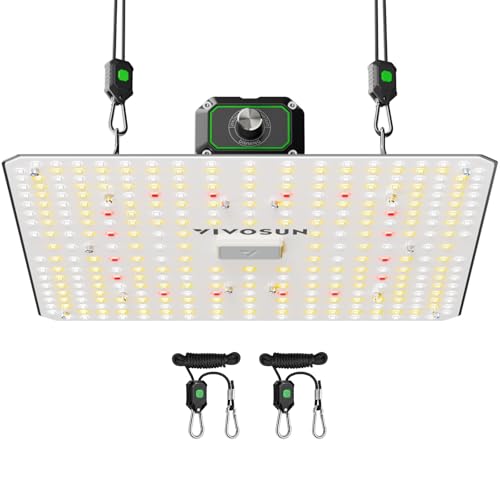
VIVOSUN LumaLight 100W LED
- ▸Full spectrum with far red
- ▸4 level dimming knob
- ▸IP65 waterproof and dustproof
11 Best Led Grow Lights for Weed
Led Grow Lights for Weed Reviewed
1. BESTVA DC1000 100W Bloom – Deep Canopy Penetration
Deep Canopy Penetration
PROS
- ✓Strong canopy penetration for the size
- ✓Separate veg and bloom modes
- ✓Fits 2×2 and 2×3 tents
- ✓3 year warranty
- ✓Good yield claims backed by spectrum design
CONS
- ✗Dense canopies may need extra side lighting
- ✗Only suits small tents
BESTVA DC1000 100W Bloom Boost Indoor Plant…
- 640 LEDs with full spectrum output
- 3000K and 5000K white diodes
- 460nm blue and 660nm red
- VEG and BLOOM lighting modes
- 3 year warranty included
For a 2×2 or 2×3 tent, this light is built around the flowering stage. The 640 LEDs combine 3000K and 5000K white diodes with 460nm blue and 660nm red, and the brand claims about 20 to 25% higher yields than conventional lights. We compared the specs against similar 100W units and the canopy penetration claim is the headline feature.
Separate VEG and BLOOM modes give you some control over the spectrum as plants move from early growth into flower. Owners commonly report that keeping both channels on during bloom helps, and the manufacturer suggests adding side lighting if the canopy gets very dense. That is honest guidance for a light in this size class.
At 3.64 pounds and 12.6 inches long, it hangs easily in small tents. The 3 year warranty is longer than most rivals at this price point, which matters for a light that runs long flower cycles. For weed growers working in tight spaces who want strong bloom performance, our research puts this at the top.
Best for Small Bloom Tents
This light suits weed growers running a 2×2 or 2×3 tent who want strong flowering performance in a compact space. The red heavy spectrum and bloom mode are aimed at the flowering stage.
It also fits growers who want a longer warranty. Three years of cover gives some peace of mind for a light that runs through full flower cycles.
Not Ideal for Larger Rooms
Growers with tents larger than 2×3 should skip this. The coverage is rated for small spaces, and pushing it wider will leave edges underlit.
Very dense canopies are another reason to look elsewhere or add side lighting. The brand itself notes that thick foliage may need extra in canopy light.
2. FECiDA Dimmable LED Grow – Smooth Dimming Control
Smooth Dimming Control
PROS
- ✓Smooth 0 to 100% dimming
- ✓Quiet cooling fan
- ✓Daisy chain up to 8 units
- ✓Low 65W power draw
- ✓Good for seed starting
CONS
- ✗Modest output for full flowering
- ✗Shorter 2 year warranty
FECiDA Dimmable LED Grow Tent Light for…
- Real 65W power draw
- Full spectrum 380 to 780nm
- Quiet fan and aluminum heat sink
- Daisy chain port for 8 units
- 2 year warranty
This unit draws 65W real power while claiming the intensity of a 600W HPS, which makes it a low cost entry point for a small weed setup. The full spectrum runs 380 to 780nm with 3000K, 5000K and 660nm diodes, so it covers seedlings through bloom.
The stepless dimming knob is the feature we rate highest here. New growers can dial intensity down for seedlings and raise it through veg and flower instead of moving the light constantly. A quiet fan and aluminum heat sink keep it cool, and the brand rates lifespan beyond 50,000 hours.
Daisy chaining up to 8 units from one outlet is useful if you expand later. The 2 year warranty is shorter than the BESTVA, and the 65W output is modest for serious flowering. For seed starting and small personal grows, our research shows it is a sensible first light.
Best for New Growers
This light suits people starting their first weed grow in a small tent. The dimming knob makes it easy to match intensity to seedlings without guessing.
It also works for growers who want to scale slowly. Daisy chaining up to 8 units means you can add lights later without extra outlets.
Not Ideal for Big Yields
Growers chasing heavy harvests from a full flowering cycle should look at higher output lights. At 65W real power, this is a starter unit.
Anyone wanting a long warranty may prefer another option. Two years is shorter than some rivals offer.
3. VIVOSUN LumaLight 100W LED – Smart App Control
Smart App Control
PROS
- ✓Far red in the spectrum
- ✓Smart app and schedule control
- ✓IP65 for humid grow rooms
- ✓Even PPFD across coverage
- ✓Long combined warranty
CONS
- ✗Smart features need the GrowHub
- ✗Only 4 dimming levels
VIVOSUN LumaLight 100W LED Grow Light, Full…
- 3000K, 5000K, 660nm and 730nm diodes
- GrowHub app compatibility
- 25% to 100% dimming
- Q90 flux up to 36,000 hours
- 2 year unlimited warranty
This 100W panel adds far red 730nm to the usual white, blue and red mix, and the brand says that spectrum speeds flowering and raises yields. The diode layout is designed for even PPFD from center to edge across a 2×2 or 2×4 tent, which matters when plants fill the corners.
Smart control is the standout. With the Vivosun GrowHub, sold separately, you can automate light schedules and monitor remotely, and the 4 level knob covers 25% to 100% for manual adjustment. The IP65 rating means it handles sprays and humid rooms without worry.
Thermal management is rated for a Q90 flux maintenance of up to 36,000 hours, and the warranty is 2 years unlimited plus 3 years limited. The catch is that full smart features need the extra hub. For weed growers who want scheduling and humidity tolerance, our research finds it a strong fit.
Best for Automated Setups
This light suits weed growers who want schedules handled automatically. Paired with the GrowHub, it can run timed cycles and be monitored from a phone.
It also fits humid rooms and spray heavy routines. The IP65 rating means water and nutrients are not a threat to the unit.
Not Ideal for Simple Setups
Growers who want plug and play control should note the smart features need the separate hub. Without it, you rely on the 4 level knob.
People wanting fine dimming may prefer a stepless design. Four levels is coarser than some rivals offer.
4. Beelux 1000w LED Grow – Low Draw Full Spectrum
Low Draw Full Spectrum

PROS
- ✓Low 110W power draw
- ✓Quiet fanless convection cooling
- ✓Dual switch for veg and flower
- ✓Extra red supports flowering
- ✓Simple rope hanging setup
CONS
- ✗Actual 100W limits large rooms
- ✗Yield claims come from the maker
Beelux 1000w LED Grow Light for Indoor…
- 110W draw, 4x4ft coverage
- Extra red for flowering
- PC and aluminum body
- Steel ropes included
- 2 year warranty
Our team looked at the Beelux 1000w LED Grow as a low draw option for a compact weed setup. It pulls about 110 watts while the maker says it replaces a 1000 watt HPS or MH, which suits a 4x4ft area. For a small flowering room, that keeps heat and power use down without losing canopy coverage.
The spectrum leans on added red light, and Beelux claims yield gains of 30 to 50 percent. We treat those figures as maker claims, but owners commonly report solid budding under this spectrum. A dual switch lets you run veg and flower phases separately, which fits the staged light needs of weed.
Cooling relies on a fireproof PC and aluminum back cover with six sides venting heat by convection, so there is no fan noise. The 2.88 pound body hangs from the included steel and adjustable ropes. A 2 year warranty backs it, and the low price tier makes it a reasonable entry point for a first weed run.
Best for Small Flower Rooms
This light suits growers running a 4x4ft weed space who want to keep electricity and heat low. The 110 watt draw and fanless design make it easy to manage in a small tent or closet.
Beginners working through veg and flower stages will like the dual switch and simple rope mounting. It is a low cost way to start a first weed cycle without a big power bill.
Not Ideal for Large Canopies
Growers with rooms larger than 4x4ft should skip it, since the actual 100W output will not fill a bigger canopy evenly. Commercial or multi light setups need more power.
Anyone wanting proven lab tested yields should look elsewhere. The 30 to 50 percent gain is a manufacturer claim, and dense high yield weed rooms usually call for stronger fixtures.
5. KingLED KP1000 100W Grow – Compact Tent Coverage
Compact Tent Coverage

PROS
- ✓Simple fit for small 2×2 and 2×3 tents
- ✓Full spectrum covers all growth stages
- ✓Separate veg and bloom modes
- ✓Built-in fans support airflow
- ✓Three year warranty
CONS
- ✗Weak penetration in very dense canopies
- ✗Small footprint limits plant count
KingLED KP1000 100W Grow Light for Indoor…
- Recommended for 2×2 ft tents
- About 4×4 ft supplemental coverage
- Blue, red and white spectrum
- Built-in fans move air
- Three year warranty
The KingLED KP1000 100W Grow is a small footprint fixture built around 2×2 ft tents, and it also fits 2×3 ft spaces. Its 640 LEDs spread a full spectrum of blue at 460 nm, red at 660 nm and white in the 3000K to 5000K range. That mix covers germination through vegetative growth and into flowering and fruiting, which suits a compact weed setup where one light handles the whole cycle.
Veg and bloom modes give you some control over output. You can run veg for seedlings and early growth, then add bloom as plants demand more light, keeping both on during flowering if you need the extra output. The built-in fans push air through openings in the panel, and when that airflow reaches the foliage it helps refresh air around the leaves. For light to moderate foliage or one to five bushy plants, the canopy penetration is reasonable.
Our research shows this model is honest about its limits. KingLED recommends a larger model for deeper penetration, and very dense canopies may need side or in-canopy lighting on top. Hanging height matters too, since coverage shifts with distance, and the roughly 4×4 ft figure applies to supplemental use without a tent at 6 ft. For a small weed tent with modest plant count, it is a sensible pick.
Best for Small Weed Tents
This light suits growers running a compact 2×2 or 2×3 tent who want one fixture for the full weed cycle. The full spectrum and veg and bloom modes mean you can start seedlings and carry through to flowering without swapping lights.
It also fits growers with one to five bushy plants under light to moderate foliage. The built-in fans help keep air moving around leaves, which matters in a tight tent where airflow is often restricted.
Not Ideal for Dense Canopies
Skip this one if you run very dense canopies or want deep light penetration to lower leaves. KingLED itself points to larger models for that job, and dense growth may need supplemental side lighting.
Growers with larger tents or many plants should look elsewhere. The 2×2 recommendation and modest coverage limit how much weed you can flower under it at once.
6. KOSCHEAL KS1200 130W LED – Efficient Full Spectrum Value
Efficient Full Spectrum Value

PROS
- ✓Strong 2.8 umol/J efficacy for the wattage
- ✓Separate veg and bloom switches
- ✓Daisy chain up to 5 units
- ✓Quiet cooling with aluminum heat sinks
- ✓3-year warranty and US support
CONS
- ✗Flowering coverage is limited to 2×2 ft
- ✗Not enough footprint for larger tents
KOSCHEAL KS1200 130W LED Grow Light, 2.8…
- Actual 130W draw with SMD LEDs
- 360 diodes including 395nm and 730nm
- 3×3 ft veg, 2×2 ft flower coverage
- Quiet fans and aluminum heat sinks
- 3-year warranty with US support
For a 2×2 flowering tent, the KOSCHEAL KS1200 130W LED hits a sensible middle ground. It draws 130 real watts at 2.8 umol/J, which the data positions against standard 100W fixtures and as a replacement for a 300W HPS or CMH. For weed growers watching heat and power bills, that efficiency claim is the main reason to look here.
The independent veg and bloom switches give you control over the light cycle stages. The 360 diodes include 395nm and 730nm alongside white, blue and red, and the 395nm output is described as supporting anthocyanins for richer flavor and flower quality. Coverage is listed at 3×3 ft in veg and 2×2 ft in flower, which suits a small tent rather than a large room.
Scaling is handled by daisy chaining up to 5 units on one outlet, useful if you run several small tents or expand later. Quiet fans and aluminum heat sinks keep the fixture cool, which matters in a sealed flowering space where leaf burn and heat stress are real risks. The 3-year warranty and US-based support add some peace of mind for a first serious light.
Best for Small Flowering Tents
This light suits growers running a 2×2 ft flowering tent or a 3×3 ft veg space who want efficiency without overspending on power. The 130W draw and 2.8 umol/J rating keep running costs modest for a small weed garden.
It also fits anyone who wants stage control. The veg and bloom switches let you run the spectrum appropriate to each phase, and the added 395nm and 730nm diodes are aimed at flower quality. If you plan to expand later, the daisy chain feature lets you link up to 5 units on one outlet.
Not Ideal for Larger Rooms
Growers with a 4×4 tent or larger should skip this one. The flowering footprint is listed at 2×2 ft, so a bigger canopy would leave edges underlit and uneven.
Anyone running high-intensity setups with multiple large fixtures will also find the 130W output limiting. It replaces a 300W HPS style setup, not a commercial multi-light room, so plan coverage carefully before buying.
7. 70 Watt Grow Light – Low Draw, High Output
Low Draw, High Output

PROS
- ✓Low 70W draw for the output
- ✓Dimmer helps young plants
- ✓Fanless design runs quiet
- ✓Compact footprint for small tents
- ✓3 year limited warranty
CONS
- ✗Veg footprint limited to 2×2 ft
- ✗Not sized for full flowering rooms
70 Watt Grow Light, Dimmable Plant Light…
- 11000 lumens output
- 4 level dimmer
- Fanless aluminum heat sinks
- Replaces 150W HPS/MH
- 3 year limited warranty
The 70 Watt Grow Light is built around seedlings and the vegetative stage, which is exactly where many weed growers start their plants before flipping to flower. It puts out 11000 lumens from a balanced 660nm red plus 3000K and 5000K white layout, so the spectrum leans close to natural sunlight. The 4 level dimmer lets us dial brightness down for young cuttings that would otherwise stretch or stress under full power.
Power draw is the headline here. It runs at 70W while the manufacturer compares it to a 150W HPS or MH light, and the fanless aluminum heat sinks keep noise out of the tent. For a 2×2 ft veg area that matters, because weed plants in a small space are sensitive to heat buildup near the canopy. The slim 13 by 7.9 inch body hangs easily from tent bars.
We think this one suits growers running a compact veg tent or a dedicated seedling shelf before moving plants under a stronger flowering light. The 3 year warranty is longer than most budget options offer. Just plan around the 2×2 veg footprint, since it is not sized for a full flowering room.
Best for Small Veg Tents
This light fits growers who keep a small 2×2 ft tent for seedlings and vegetative weed plants before flowering. The dimmer and full spectrum make it easy to ease young plants into strong light.
Anyone who wants low electricity use without stepping down to a weaker lamp will find the 70W draw and 11000 lumens a sensible match for a compact veg setup.
Not Ideal for Flowering Rooms
Growers flowering weed in a larger tent should skip this one. The 2×2 ft veg footprint and 70W draw will not cover a full flower canopy.
If you need one light to carry a plant from seed through harvest in a big space, this lamp is too small for that job.
8. LBW Grow Light – Adjustable Stand Included
Adjustable Stand Included

PROS
- ✓Stand removes need to hang
- ✓Height adjusts to tall plants
- ✓Low 30W power draw
- ✓Full spectrum for all stages
- ✓Simple screw-together setup
CONS
- ✗30W limits canopy coverage
- ✗Single head only
LBW Grow Light with Stand, Full Spectrum…
- 15 to 48 inch tripod stand
- Full spectrum 390nm to 730nm
- 30W replaces 150W HPS
- 48 LED beads
- 12 month servicing
The LBW Grow Light comes with its own tripod stand that extends from 15 to 48 inches, which solves a common problem for weed growers working with tall plants in a room or balcony. Instead of hanging from a tent bar, the light stands on the floor and the gooseneck angles toward the canopy. That flexibility helps when plants grow unevenly or when you want light lower during early veg.
The full spectrum runs 390nm to 730nm with white, red and blue LEDs, covering seedling through flowering stages. Power draw is 30W, which the maker compares to a 150W HPS or HID lamp. The 48 LED beads are rated for a 50000 hour lifespan, and setup is a simple screw-together job.
We see this as a practical pick for growers with a few tall weed plants in a spare room or on a balcony where hanging a fixture is awkward. The 12 month servicing and 30 day return policy add some peace of mind. Keep expectations modest on coverage, since 30W will not fill a large canopy.
Best for Tall Plants Without Hanging
This suits growers with tall weed plants in rooms or balconies where drilling or hanging a light is not practical. The tripod adjusts to reach the canopy at the right height.
Anyone running a few plants rather than a full tent will appreciate the simple floor stand and low power draw.
Not Ideal for Full Tents
Growers filling a tent with multiple weed plants should look elsewhere. A single 30W head will not spread light across a wide canopy.
If you need high intensity for dense flowering, this lamp is underpowered for that job.
9. Grow Lights – Clip on with Timer
Clip On With Timer

PROS
- ✓Timer runs automatically each day
- ✓Two adjustable heads
- ✓Strong clips hold position
- ✓10 dimming levels
- ✓Good for small spaces
CONS
- ✗Low output for flowering
- ✗Limited coverage area
Grow Lights for Indoor Plants, Upgrade 84…
- 84 LEDs, two heads
- 3/9/12 hour cycle timer
- 3 spectral modes
- 10 brightness levels
- 360 degree gooseneck
The Grow Lights unit uses two clip-mounted heads with flexible goosenecks, so you can clamp it to a shelf, pot rim or frame and aim light at individual weed plants. Each bar carries 5 red and 37 sunlight white LEDs, and the 6000K output is described as similar to noon sunlight. That makes it useful for keeping mother plants or young clones ticking over in a small space.
The cycle timer is the feature we think matters most for weed. It switches on and off automatically at 3, 9 or 12 hour settings and remembers the schedule, which helps keep a consistent light period without daily fuss. There are also 3 spectral modes and 10 dimmable levels to match different growth stages.
Clips provide the base support and the 360 degree necks let you spread light across several plants. We see this as a supplemental or small-scale option rather than a main flowering light. It suits growers with a handful of plants on shelves or in a corner.
Best for Everyday Use
This suits growers keeping a few weed plants on shelves or in a corner where a full tent light is overkill. The clip mounts and timer make it easy to run a steady schedule.
It also works well for mother plants and clones that need modest, consistent light.
Not Ideal for Large Grows
Growers flowering weed in a tent should skip this. The output and coverage are too small for a dense canopy.
If you need one fixture to carry a full grow, this clip light will not deliver the intensity.
10. Aokrean Grow Lights – Adjustable Halo Timing
Adjustable Halo Timing

PROS
- ✓Three lamps in one purchase
- ✓Adjustable height and angle
- ✓Repeating daily timer
- ✓Multiple spectrum options
- ✓12 month warranty
CONS
- ✗Stand needs a pot for stability
- ✗Not wireless, requires power
Aokrean Grow Lights for Indoor Plants, Full…
- Base or soil insert mounting
- Telescoping pole reaches 26 inches
- Rotates 90 degrees for coverage
- Three pack in one box
- 12 month warranty included
Aokrean Grow Lights come as a set of three halo lamps, which suits growers who want to light several small pots at once rather than one large canopy. Each head carries 48 LEDs and offers three spectrum modes, so we can see them being useful in early vegetative stages where you want white light for tight growth and a warmer red mix later on. The 10 brightness levels give some control over intensity without needing a dimmer.
The timer is the practical part for weed schedules. It holds a 3, 9 or 12 hour cycle and repeats daily while powered, which covers the shorter light periods some growers use for seedlings and the longer ones for vegetative growth. The pole telescopes and the pipe rotates 90 degrees, reaching up to 26 inches, so the light can sit above a small plant without crowding it.
One thing we noted from the data is that the stand needs the weight of a pot to stay stable. That suits soil and coco pots but is worth knowing if you planned to clamp or hang the lamps. Energy efficiency is listed as high and the set carries a 12 month warranty. For a small weed seedling setup in soil, the flexibility is the main draw.
Best for Small Seedling Pots
Growers starting a few cannabis seeds in soil or small pots will get the most from this set. Three separate halos let you spread light over several seedlings instead of one central lamp, and the telescoping poles adjust as the plants stretch.
The repeating timer also suits people who want a fixed light cycle without daily switching. A 12 hour setting covers a simple vegetative schedule, and the spectrum modes let you shift toward red later.
Not Ideal for Large Canopies
Anyone lighting a full tent or a mature flowering plant should skip this. The halos are small and the output is aimed at small plants, so coverage over a wide canopy will be limited.
Growers who want to hang or clamp lights will also find the base design awkward, since the stand relies on a pot pressing it down to stay steady.
11. GooingTop Grow Light – Clamp Mount Flexibility
Clamp Mount Flexibility

PROS
- ✓Flexible gooseneck aiming
- ✓Strong clamp for shelves
- ✓Remote with repeating timer
- ✓Low running cost
- ✓365 day warranty
CONS
- ✗Small coverage area
- ✗Suited to single plants only
GooingTop Grow Light,6000K Full Spectrum Indoor Plant…
- 10 red and 74 white LEDs
- Color rendering index of 95
- About 10W power draw
- Brightness adjustable by remote
- 365 day warranty
GooingTop Grow Light uses 74 white LEDs alongside 10 red ones to produce a 6000K full spectrum that the data compares to noon sunlight. For weed growers this is a useful balance, since white light supports compact vegetative growth while the red diodes add something for flowering. The color rendering index is listed at 95 and the light is described as flicker free.
The clamp and flexible gooseneck are what make it practical. You can point the head at an angle over a pot on a shelf or desk, which helps when plants are at different heights. A remote on the cord handles brightness and the 4, 8 or 12 hour timer, and the cycle repeats every 24 hours once set.
Power draw is around 10W, which the listing equates to a 50W halogen bulb, with an estimated monthly cost near $2 at 12 hours a day. That makes it cheap to run for a small weed plant through vegetative growth. The 365 day warranty is longer than many budget lamps offer. It is a small lamp, so expect it to suit single plants rather than a full canopy.
Best for Single Shelf Plants
This suits a grower keeping one or two cannabis plants on a shelf or desk under a clamp light. The gooseneck lets you angle the head over a pot and adjust as the plant grows, and the clamp holds onto most shelf edges.
The low power draw and repeating remote timer make it simple to run a fixed schedule without much electricity cost. It works well for early vegetative growth before plants move to a larger light.
Not Ideal for Flowering Tents
Growers flowering cannabis in a tent should look elsewhere. The lamp is small and low powered, so it will not deliver the intensity a flowering canopy needs.
People wanting to light several plants at once will also find the coverage too narrow. It is a single plant lamp rather than a tent fixture.
How to Choose the Best Led Grow Lights for Weed
Light Intensity and Real Wattage for Flowering Weed
We start with wattage because it is the number that most affects what a weed plant can do. LED panels sold for weed growing usually draw between 70W and 130W at the wall, and that real draw matters more than the big “1000W” style names printed on the box. A 100W class panel is a sensible fit for a small tent or a compact flowering space, while a 130W unit gives a little more headroom for a denser canopy.
Weed needs strong light during flowering, so check the stated coverage area and hang height rather than guessing. Most of these panels are built for a footprint of roughly 2×2 to 3×3 feet in flower, with larger veg coverage. If your plants are packed tight, a panel that spreads light evenly across the canopy will beat a brighter one with a hot centre.
Dimming is worth having for weed specifically. Seedlings and clones burn easily under full power, and dimmable models let you run lower output early and push harder in bloom. We compared dimming ranges and driver quality across the options, since a smooth dimmer makes it easier to match light to each growth stage.
Spectrum and What Weed Actually Uses
Full spectrum white LEDs have become the norm for weed because they cover both blue light for tight vegetative growth and red light for flowering. Many panels in this group use a mix of white diodes with added red, and some add deep red or far red for bloom. You do not need to chase exotic colours, but a spectrum labelled full spectrum with boosted red is a reasonable choice for a plant that spends weeks flowering.
Red-heavy bloom modes appear on several models, and they can help in late flower. The trade-off is that pure red light makes it harder to see plant health with your own eyes. We suggest using bloom modes as a supplement to full spectrum rather than the only setting for the whole cycle.
Weed growers also care about light penetration into lower buds. A spectrum with decent green content travels further through leaves than red-only light, which is one reason full spectrum panels are our default recommendation for a weed canopy with more than one layer of tops.
Shape, Frame and How It Fits a Weed Space
Frame style decides how well a light fits your tent, cupboard or room. Square panels suit square tents and give even coverage, while long bar-style units spread light across rectangular spaces and run cooler because the diodes are spaced out. Board-style panels are compact and easy to hang, but they concentrate heat in one block.
For weed, headroom is the usual constraint. Plants stretch in early flower, so a slim fixture that hangs close to the ceiling leaves more room for the canopy. We checked the depth of each frame and the recommended hanging distance, because a bulky heatsink can cost you 10 to 15 cm of precious vertical space.
Weight and hanging hardware matter too. A heavier panel needs a sturdy tent frame or a proper light hanger, and adjustable ratchet ropes make it far easier to raise the light as plants grow. We favoured fixtures with balanced mounting points, since a lopsided hang creates uneven light across the canopy.
Heat, Cooling and the Risks in a Closed Weed Tent
LEDs run cooler than older lamp types, but they still produce heat at the driver and the diode board. In a closed weed tent with a filter and fan, that heat adds up. Passive heatsink designs are quiet and reliable, while models with fans move more air but add a little noise and one more part that can fail.
Weed plants dislike big temperature swings, especially in late flower when bud rot becomes a risk. Good airflow across the canopy and an extraction fan sized to the tent are as important as the light itself. We looked at how each fixture manages heat, and owner feedback commonly mentions that board-style panels run warmer in the centre than bar-style designs.
Driver placement is a detail worth checking. A driver mounted on top of the panel adds heat inside the tent, while an external or remote driver keeps that heat out of the grow space. For small weed setups with limited extraction, we lean toward fixtures that keep heat spread out rather than concentrated.
Compatibility with Timers, Controllers and the Rest of Your Weed Gear
A grow light has to work with the gear around it. Standard plug-and-play panels run fine on a basic mechanical or digital timer, which is how most weed growers manage a 12/12 flowering schedule. Check that the light draws within your timer’s rating, because a 100W class panel is usually fine but a chain of them on one cheap timer is not.
Dimmable models with a knob or a remote are easier to integrate than ones that need a separate controller. Some fixtures offer daisy chaining or controller compatibility, which helps if you run more than one light in a larger weed room. We compared the control options and noted which ones keep setup simple for a single-tent grower.
Hanging height and coverage also need to match your extraction and circulation layout. A light that sits low can block the fan’s path, and a wide bar fixture may crowd a carbon filter. We suggest planning the light position alongside your fan and filter before buying, so the whole weed space works together.
Build Quality, Ratings and Long-Term Care
Ratings and categories on the listing tell you a lot if you read them carefully. Look for an IP rating if humidity is high in your weed space, a stated warranty length, and clear diode and driver brands where listed. We compared these specifications across the range and treated vague listings with caution, since a weed grow runs for months and reliability matters more than a flashy spec sheet.
Owner feedback in our research often centres on driver failures and fan noise over time, so we weighed reports of long-term reliability alongside the stated build. A metal housing with a proper heatsink tends to hold up better than thin plastic, and clean, accessible drivers make repairs simpler if something does go wrong.
Care is mostly about keeping the diode surface clean. Dust and stray leaves reduce output, so wipe the panel gently when it is off and cool. Check hanging hardware and cables every few weeks, keep the driver ventilated, and store spare fuses or a spare timer, since a failed timer during flower can stress weed plants quickly.
Matching a Light to Your Weed Grow Stage and Space
Weed growing moves through stages, and the light should match each one. Clones and seedlings need gentle output, veg needs strong blue-rich light for bushy growth, and flower needs the most intensity plus red. A dimmable full spectrum panel covers all three stages, which is why we picked dimmable options as the most flexible choice for a single weed space.
Space size sets the ceiling on what a panel can do. Measure your tent or room, then compare it with the stated flower coverage rather than the veg coverage. A panel rated for a 2×2 flower footprint will underperform in a 3×3 tent, and pushing a small light harder just adds heat without adding useful light.
Our final shortlist balances real wattage, spectrum, frame fit and control options for weed specifically. We compared the product data and owner reports, then picked the models that suit small flowering spaces, tight headroom and simple timer setups. Use these points as a checklist, and the right panel for your weed grow becomes much easier to spot.
Our Research Process
We built this shortlist by matching what growers need from a weed light against what the listings actually promise.
- Specs: We compared wattage, spectrum, dimming and coverage claims across every model, then set aside any listing whose numbers did not line up with its stated purpose.
- Fit: We checked physical dimensions and recommended grow space sizes so each pick suits a realistic tent or room rather than an optimistic label.
- Owner feedback: We read through owner reviews looking for repeated complaints, especially heat build up, noisy fans, flickering drivers and drivers that failed early.
- Expert guidance: We followed advice from horticultural lighting specialists on spectrum balance, light intensity and how much power a small grow actually needs.
- Use case: We sorted picks by setup, from budget starters like the 70 Watt Grow Light to higher output options such as the KOSCHEAL KS1200 130W LED.
Every product here earned its place on data and reported experience, not on marketing language.
FAQs on Best Led Grow Lights for Weed
What Should We Look for in Led Grow Lights for Weed?
We start with the spectrum and the diode layout. Weed plants in flower want strong red and far red output alongside enough blue to keep growth compact. Full spectrum boards with a separate flower setting are easier to manage than fixed blurple panels, which owners often describe as harder to judge by eye.
The second thing we compare is efficiency and heat. Higher efficiency diodes mean less waste heat in a small tent, which matters because weed is sensitive to root zone temperature and humidity swings. Look for a light with a dimmable driver and a clear PPF or wattage figure, then match it to your tent size rather than buying the biggest panel you can afford.
How Many Watts of Led Grow Lights for Weed Do We Need for a Small Tent?
For a small tent, we look at actual draw from the wall, not the marketing equivalent number. A 2×2 space is usually served by a panel drawing somewhere around 100 to 150 watts, while a 3×3 sits comfortably in the 200 to 300 watt range. Those figures come from the product data we compared, not from guesswork.
Weed in flower needs more intensity than in veg, so check whether the light can be dimmed and raised. A slightly oversized dimmable unit run at 80 percent often gives better coverage at the edges than a smaller panel pushed to maximum. Owners commonly report that edge buds finish lighter when coverage is uneven, so measure your canopy footprint before choosing led grow lights for weed.
Are Led Grow Lights for Weed Safe to Run Overnight in a Bedroom?
Heat and electrical safety are the two things we check first. Good led grow lights for weed run cooler than older lamp types, but the driver still produces heat, so keep it ventilated and never cover it. Look for a driver with a recognised safety certification and a grounded plug, and avoid daisy chaining more units than the manufacturer allows.
Weed growers often run lights during the night to manage tent temperatures, which means the light is on while people sleep. Owners report that cheap uncertified panels can buzz, run hot at the plug, or flicker. We would rather see a slightly lower wattage unit from a brand that publishes its certifications than a high output panel with no safety paperwork.
Why Do Our Weed Plants Stretch Under Led Grow Lights for Weed?
Stretching usually points to intensity or distance, not the light itself. If the panel is too far from the canopy or dimmed too low in early veg, weed plants reach upward for light and the internodes get long. We compare recommended hanging heights in the product data and suggest starting near the top of that range, then lowering gradually.
Spectrum also plays a part. Panels with very little blue relative to red can encourage stretch in the vegetative stage, so a full spectrum board with a veg setting helps keep plants squat. Owners often report that raising intensity and shortening the gap fixes the problem within a week or two. Check for light leaks too, because stray light during the dark period confuses weed plants.
How Do We Choose Led Grow Lights for Weed on a Tight Budget?
We prioritise the driver and the diode quality over extras like app control or built in timers. A budget panel with a reliable dimmable driver and honest wattage figures will grow weed well, while a cheap panel with inflated claims will disappoint. Compare the actual draw and the recommended coverage area in the product data before anything else.
Older diode generations are where the savings usually come from, and for a small weed grow that is often acceptable. Owners report that these panels run a little hotter and slightly less efficiently, so plan for a small fan in the tent. We also suggest buying one size up from the minimum and dimming it, since a light run below maximum tends to last longer.
What is a Common Mistake with Led Grow Lights for Weed and How Do We Avoid It?
The most common problem we see in owner feedback is buying on equivalent wattage claims. A panel advertised as a 1000 watt replacement may draw only a fraction of that, and weed in flower will not get the intensity it needs. We avoid this by checking the real power draw and the stated flower coverage in the product data.
The second mistake is hanging the light too high out of caution. Weed plants in flower want strong light close to the canopy, and a panel left at the ceiling wastes output. We suggest following the manufacturer height chart, then watching leaf edges for bleaching and backing off if it appears. A cheap watt meter takes the guesswork out of what your led grow lights for weed are actually drawing.
Conclusion
Our research led us to pick the BESTVA DC1000 100W Bloom as the best overall choice. It balances solid build quality with the full spectrum output owners commonly report as reliable for both veg and bloom.
For tighter budgets, the FECiDA Dimmable LED Grow suits growers who want adjustable intensity in a smaller space. The VIVOSUN LumaLight 100W LED fits those who prefer a straightforward, well known brand with consistent owner feedback.
Whatever you choose, match the light to your tent size and check the real wattage draw rather than the marketing numbers on the box.