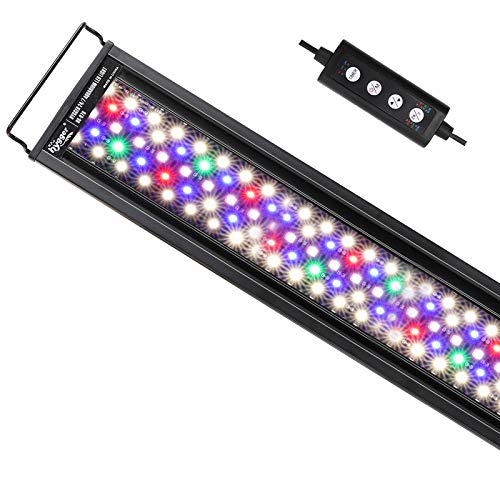
Leaves pale at the base and stems stretch toward the lid. That is the usual sign your planted tank is running short on the right light. Plants need steady intensity and a dependable daily schedule to grow compact and green.
You keep a planted tank and want growth without algae taking over. A weak or badly timed light leaves plants leggy and slow. Our guide covers the best led aquarium lighting for plants.
We started with spectrum, PAR output, timer modes and tank fit. Then we compared coverage, build quality, mounting options and owner feedback across models like the Fluval Plant 3.0 LED and hygger 24/7 units. That work shaped our pick of the best led aquarium lighting for plants.
Top 3 Picks for Best Led Aquarium Lighting for Plants
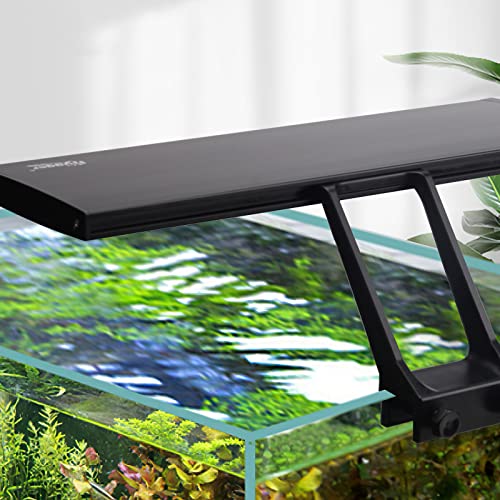
hygger Clip On 24/7
- ▸24/7 sunrise to moonlight cycle
- ▸Seven selectable colors
- ▸Clips on thin tank walls

Fluval Plant 4.0 LED
- ▸Six band plant spectrum
- ▸FluvalConnect app control
- ▸110 degree light spread

Fluval Plant 3.0 LED
- ▸59W for 48 to 60 inch tanks
- ▸Six band full spectrum
- ▸Extendable mounting brackets
10 Best Led Aquarium Lighting for Plants
Led Aquarium Lighting for Plants Reviewed
1. Hygger Clip on 24/7 – Clip Mount with 24/7 Mode
Clip Mount with 24/7 Mode
PROS
- ✓Simple 24/7 light cycle out of the box
- ✓Adjustable timer, brightness and color
- ✓Clip fits a range of glass thicknesses
- ✓High CRI of 85 for natural color
- ✓Two year warranty
CONS
- ✗Only 14W, so limited for larger or deep tanks
- ✗Cycle color mode has no brightness selection
hygger Clip On 24/7 Lighting Aquarium LED…
- 14W for 12 to 20 inch tanks
- CRI rated at 85
- White 6500K, blue 455nm, red 620nm
- 68 LEDs including RGB beads
- Timer options of 6, 10 or 12 hours
For a small planted tank, the hygger Clip On 24/7 covers the basics without asking much of the keeper. The default mode runs a gradient orange sunrise, then white daylight, then blue moonlight, so plants get a steady daily rhythm without anyone touching a dial. In the DIY mode you can set a timer at 6, 10 or 12 hours, pick from five brightness levels and choose among white, red, blue, green, purple, orange and cyan.
That flexibility matters for planted setups, where too much light invites algae and too little leaves growth slow and leggy.
The clip bracket fits tank walls under 0.9 inches thick, and the light body can be taken off and mounted horizontally or vertically. The 14W version is aimed at tanks from 12 to 20 inches long, with 68 LEDs and 817 lumens. A color rendering index of 85 keeps fish and plant colors close to natural, and the soft output is meant to avoid flicker that bothers fish and viewers.
The beads are rated for at least 50,000 hours, and the separable adapter means a damaged power supply does not sink the whole unit.
Owners of nano and mid sized planted tanks commonly report that the timer and color controls are simple to live with day to day. The main thing to watch is coverage. At 14W this is a modest light, so it suits low to medium demand plants in a narrow tank rather than a deep, heavily planted aquascape. The two year warranty adds some peace of mind for a clip on fixture.
Best for Small Planted Tanks
This suits keepers running a 12 to 20 inch planted tank who want a set and forget light cycle. The default sunrise to moonlight schedule takes care of daily timing, and the DIY mode lets you tune hours, brightness and color as plants settle in.
It also fits renters or anyone who does not want to drill or hang a fixture. The clip bracket grips thin glass and the body can be repositioned horizontally or vertically, which helps when you rescape a nano tank.
Not Ideal for Deep or Large Tanks
Skip this if your tank is longer than 20 inches or deeper than a standard nano. At 14W and 817 lumens it will not push strong light to the substrate in a tall or wide aquarium, and demanding carpet plants will likely struggle.
It is also a poor match for anyone who wants app control or fine spectrum tuning. Colors are chosen from fixed options rather than adjusted band by band, so serious aquascapers will want more control.
2. Fluval Plant 4.0 LED – App Control with Plant Spectrum
App Control with Plant Spectrum
PROS
- ✓Spectrum designed for plant growth and color
- ✓Free app for color and intensity changes
- ✓Programmable 24 hour light cycle
- ✓Planted tank presets save setup time
- ✓Wide 110 degree spread for even coverage
CONS
- ✗App based control may not suit everyone
- ✗32W limits it on very deep tanks
Fluval Plant 4.0 LED, 32 Watts, 23-35…
- 32W for 23 to 35 inch tanks
- Six LED color bands
- Programmable sunrise to night cycle
- Planted aquarium presets
- 110 degree dispersion per LED
The Fluval Plant 4.0 LED is built around plant growth first. Six LED color bands make up a full spectrum tuned for aquatic plants, and the 32W unit is sized for tanks from 23 to 35 inches. Each LED casts 110 degrees of light, which spreads coverage broadly and evenly across the tank rather than pooling under the center. For a planted setup that means less shading at the edges, where stems and foreground plants often suffer.
Control runs through the free FluvalConnect app, with no extra equipment needed. You can adjust color output and intensity, then set sunrise, mid day, dusk and night points for a full 24 hour schedule. There are also planted aquarium presets for anyone who would rather start from a proven profile than build one from scratch. That combination suits keepers who want to chase red coloration or slow growth by trimming intensity without buying a new fixture.
In our research, the appeal here is the balance of plant focused spectrum and everyday convenience. The app makes seasonal tweaks easy, and the wide spread helps fill a mid sized tank. Keep in mind that 32W suits a moderate depth, so a very tall tank may still need more punch. It is a sensible middle step for aquascapers who want programmability without stepping up to a bigger fixture.
Best for App Controlled Aquascapes
This fits planted tank owners who like to tune their light from a phone. The FluvalConnect app handles intensity and color, and the four point daily schedule lets you mimic a natural day without extra timers or plugs.
It also suits mid sized tanks from 23 to 35 inches where even coverage matters. The 110 degree dispersion and six band spectrum help stems and foreground plants get consistent light across the footprint.
Not Ideal for App Averse Keepers
Skip it if you prefer physical buttons or a simple on and off timer. Nearly all of the useful control lives in the app, so anyone who dislikes phone setup will find it fiddly.
It is also a weaker choice for very deep or very long tanks. At 32W it covers its stated range well, but a tall aquarium or a tank beyond 35 inches will likely want a more powerful fixture.
3. Fluval Plant 3.0 LED – Large Tank Full Spectrum
Large Tank Full Spectrum
PROS
- ✓59W output for long tanks
- ✓Gradual sunrise to night cycle
- ✓Planted, Tropical and Lake Malawi presets
- ✓Wide 120 degree dispersion
- ✓Three year limited warranty
CONS
- ✗Too large and powerful for nano tanks
- ✗Presets may need tuning for demanding plants
Fluval Plant 3.0 LED Planted Aquarium Lighting…
- 59W for 48 to 60 inch tanks
- Gradual 24 hour light cycle
- Six unique band waves
- Presets including Planted and Tropical
- 120 degree light dispersion
The Fluval Plant 3.0 LED is the large tank option here, at 59W and sized for aquariums from 48 to 60 inches. Six band waves give a full spectrum result aimed at plant health, and the 120 degree dispersion spreads light widely for uniform coverage across a long footprint. Extendable mounting brackets let it sit on a range of tank widths, which helps when you upgrade glass without wanting a new light.
Programming follows a gradual 24 hour cycle with sunrise, midday, sunset and night stages. There are also optional preset habitat configurations, including Lake Malawi, Tropical and Planted, so you can start from a known profile and adjust from there. For a big planted tank, that gradual ramp is useful because sudden full brightness can stress fish and feed algae before plants adjust.
Our research suggests this is the pick for keepers with a long, moderately deep aquarium who want a broad spread and a real daily schedule. The 59W output and wide dispersion suit a heavily planted 4 to 5 foot tank better than the smaller fixtures in this group.
The three year limited warranty is the longest here, and the high efficiency rating is a plus for a light that may run many hours a day. Check that your tank depth matches what 59W can reach before committing.
Best for Long Planted Aquariums
This suits owners of 48 to 60 inch planted tanks who need one fixture to cover the whole footprint. The 120 degree dispersion and 59W output give broad, even light, and the extendable brackets fit a range of widths.
It also works well for keepers who want a natural daily rhythm. The gradual sunrise, midday, sunset and night stages plus the Planted preset make a good starting point before fine tuning.
Not Ideal for Small or Shallow Setups
Skip it if you run a nano or mid sized tank. At 59W and 48 to 60 inches of coverage, it is simply too much fixture for a small aquarium and will likely be awkward to mount.
It is also a weaker fit for anyone wanting app level control. The presets and cycle are useful, but keepers who want band by band tuning from a phone may prefer a fixture with more granular adjustment.
4. Hygger 18W 24/7 Lighting – Built-In 24/7 Cycle
Built-In 24/7 Cycle
PROS
- ✓Default 24/7 cycle needs no setup
- ✓DIY timer, brightness and color control
- ✓High 85 CRI for natural colors
- ✓Extendable bracket fits several tanks
- ✓Separable adapter reduces waste
CONS
- ✗Default cycle is fixed to set hours
- ✗Only 18W, so limited on deeper tanks
hygger 18W 24/7 Lighting Aquarium LED Light…
- 18W for 18 to 24 inch tanks
- CRI up to 85
- 98 LEDs across seven colors
- Separable adapter for easy replacement
- White 6500K, blue 455nm, red 620nm
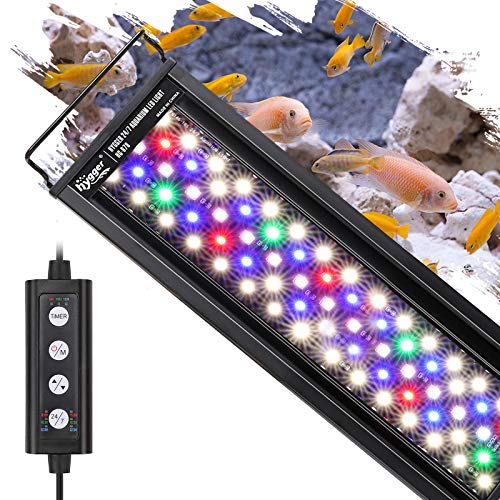
We looked closely at the hygger 18W 24/7 Lighting because planted tanks live or die on consistency. Its default mode runs a gradual orange sunrise, then white daylight, then a short blue moonlight window before switching off, which suits plants that respond to a steady daily rhythm. Owners commonly mention that the slow ramps feel gentler than a hard on and off, and that fish seem calmer during the transitions.
The DIY mode is where this light earns its place for plant keepers. You can set a 6, 10 or 12 hour timer, pick from five brightness levels, and choose among white, red, blue, green, purple, orange and cyan. The 6500K white plus the red and blue beads give the mix that leafy tanks need, and the 85 CRI keeps colors looking natural rather than washed out.
The bending bracket extends to fit freshwater tanks in the 18 to 24 inch range.
Heat is handled by thick aluminum, and the separable adapter means a damaged power supply does not scrap the whole fixture. The 50,000 hour bead rating is a long term figure we cannot verify, but it is typical for 2835 and 5050 LEDs. For a modest planted setup, this is a practical pick with real scheduling flexibility.
Best for Simple Planted Setups
This suits keepers running a small to mid freshwater planted tank who want a light that handles the daily schedule on its own. The default sunrise, daylight and moonlight sequence removes guesswork, and the DIY mode adds control when plants need a longer or shorter photoperiod.
It also fits anyone who likes tuning color. The seven color options and five brightness steps let you lean warmer or cooler depending on plant response and how the tank looks.
Not Ideal for Deep or Large Tanks
Skip this if your tank runs longer than 24 inches or is unusually deep. At 18W with 1070 lumens, the reach is modest, and demanding carpeting plants in a tall tank will likely want more intensity.
It is also a poor fit for aquarists who want app control or fully custom light curves. The timer choices are limited to 6, 10 or 12 hours, and the default cycle cannot be reshaped beyond that.
5. Fluval Plant 3.0 22 – Programmable Full Spectrum
Programmable Full Spectrum

PROS
- ✓Fully programmable 24-hour cycle
- ✓Six band full spectrum
- ✓Planted habitat preset included
- ✓Wide 120 degree coverage
- ✓3 year limited warranty
CONS
- ✗22W limits high demand plants
- ✗Presets may need tuning per tank
Fluval Plant 3.0 LED Planted Aquarium Lighting…
- 22W for 15 to 24 inch tanks
- Pre-set Lake Malawi, Tropical, Planted modes
- Extendable mounting brackets
- Programmable sunrise, midday, sunset, night
- 3 year limited warranty
The Fluval Plant 3.0 22 is the fixture we kept returning to when researching programmable planted lighting. It runs a gradual 24 hour cycle covering sunrise, midday, sunset and night, so plants get a predictable rhythm instead of an abrupt switch. Owners often report that the slow fade is one of the main reasons they choose it, and that it makes the tank easier to watch in the evening.
Six unique band waves give a full spectrum result, and there are optional pre-set configurations for Lake Malawi, Tropical and Planted habitats. The Planted preset is the obvious starting point for a leaf heavy tank, and the 120 degree dispersion spreads light across the full area for more uniform coverage. Extendable brackets let it sit on a range of aquarium widths from 15 to 24 inches.
At 22W it sits in the middle of the range, so it suits low to moderate demand plants rather than the thirstiest carpeting species. The three year limited warranty is longer than most rivals we compared. For a planted tank where scheduling and spectrum matter more than raw output, this is a strong, well supported choice.
Best for Scheduled Planted Tanks
This fits aquarists who want to set a light cycle once and let the tank run on a natural rhythm. The programmable sunrise to night sequence and the Planted preset make it easy to give plants steady, predictable light without daily fiddling.
It also suits owners of mid sized tanks who value coverage. The 120 degree dispersion and extendable brackets help fill a 15 to 24 inch footprint evenly, which reduces shaded corners where plants stretch.
Not Ideal for High Light Demands
Skip it if you are growing demanding carpeting plants or running a deep tank. At 22W the output is moderate, and light hungry species may need a stronger fixture or a second unit.
It is also less appealing if you want simple plug and play. The programming is the point here, so anyone who prefers a basic on and off timer may find the setup more involved than they need.
6. SEAOURA 24/7 Submersible LED – Submersible IP68 Design
Submersible IP68 Design

PROS
- ✓IP68 rated for submersion
- ✓Angled suction cup mounting
- ✓10 brightness and 8 color options
- ✓Full spectrum plus single colors
- ✓Low 20V operation
CONS
- ✗15 inch length limits larger tanks
- ✗Only 1 month return window
SEAOURA 24/7 Submersible LED Aquarium Light for…
- 15 inch length, low 20V operation
- 2 rows 5050 plus 1 row 2835 LEDs
- Full spectrum plus single color modes
- 120 degree sliding suction cups
- 5 timer settings, auto on and off
The SEAOURA 24/7 Submersible LED caught our attention because the mounting options are unusual for a planted tank light. With an IP68 rating it can be submerged, mounted under a hood, or fixed inside the tank with the included suction cups, and the 120 degree sliding cups let you angle it toward the plants. Owners commonly mention this flexibility as the reason they picked it over a bracket light.
The LED layout uses two rows of 5050 beads plus one row of 2835, which the maker says gives brighter and more even output than the reverse arrangement. There are 10 brightness levels, 8 colors, full spectrum and cycle modes, plus 5 timer settings with auto on and off. The 24/7 simulation moves from warm morning light through rich midday to gentle blue in the evening, which suits plants that benefit from a gradual day to night shift.
Running at 20V keeps the risk low when the fixture sits in water, though the maker stresses using the supplied plug. At 15 inches it suits smaller freshwater tanks, and the slim 0.57 inch profile hides easily behind plants or under a cover. For nano and low tech planted setups, this is a versatile, water friendly option.
Best for Nano and Low Tech Tanks
This suits small freshwater planted tanks where a conventional bracket light is awkward. The suction cups and IP68 body let you place it under a hood or inside the tank at an angle, which helps direct light at low growing plants.
It also fits keepers who want color and brightness control without an app. Ten brightness steps, eight colors and five timer settings cover most low tech needs, and the 24/7 cycle handles the schedule.
Not Ideal for Large or Demanding Setups
Skip it if your tank is wider than 15 inches or you are growing high demand plants. The slim 15 inch bar covers a small footprint, and the output is aimed at low to moderate light species.
It is also a weaker choice if you want long term peace of mind. The warranty is a 1 month no reason return rather than a multi year cover, so buyers wanting extended protection should look elsewhere.
7. NEOAQLUX 24/7 LED Aquarium – Full Spectrum Color Control
Full Spectrum Color Control

PROS
- ✓Full spectrum with 12 color choices
- ✓True 24/7 gradual light cycle
- ✓Five timer lengths with auto on off
- ✓Nine brightness levels plus memory
- ✓IP68 rated and ETL certified adapter
CONS
- ✗Brackets only span 12 to 18 inch tanks
- ✗No PAR or spectrum chart published
NEOAQLUX 24/7 LED Aquarium Light for 12-18…
- Full spectrum 5050 and 2835 LEDs
- 9 brightness levels from 20 to 100%
- Auto on and off timer
- IP68 waterproof full submersion
- Extendable brackets for 12 to 18 inch tanks
Planted tanks live or die on consistency, and this fixture leans hard into that. The 24/7 default mode runs a continuous sunrise, daylight, sunset and moonlight cycle, so a planted setup gets a steady rhythm without anyone touching a switch. We like that the cycle can start at any time, which matters if your tank sits in a room with unpredictable ambient light.
For growers who want to tune things, there are 12 color options and a gradient mode built on 5050 and 2835 LEDs, plus a full spectrum setting aimed at healthy plant growth. Nine brightness steps from 20 to 100 percent give room to dial intensity down for slow growers or low tech setups. The memory function restores your last setting after a power cut, a small thing that saves a lot of fiddling.
Build quality looks sensible for a freshwater tank. The heat resistant ABS housing and clear panel should hold up, the adapter is ETL certified, and the IP68 rating means the light can handle splashes or full submersion. Extendable brackets fit 12 to 18 inch tanks, and a one year warranty backs it. Owners commonly mention the timer doing its job quietly, which is exactly what a planted tank needs.
Best for Set and Forget Planted Tanks
This suits freshwater plant keepers who want a steady daily rhythm without checking timers. The 24/7 cycle and five timer options cover most lighting schedules, and the memory keeps settings after outages.
It also fits tanks in the 12 to 18 inch range where color tuning matters. Twelve color options and nine brightness steps let you shift the look for plant growth or fish color without buying extra gear.
Not Ideal for Very Small Nano Tanks
The extendable brackets are built for 12 to 18 inch tanks, so anything smaller will not mount cleanly. Nano setups should look at a shorter fixture instead.
Growers who need published PAR figures for high demand plants may want more data. This listing gives spectrum and color details but no measured light output for demanding setups.
8. Hygger 24/7 Mode Submersible – Hidden Mount Versatility
Hidden Mount Versatility

PROS
- ✓Mounts behind, under cover, or submerged
- ✓24/7 default cycle with moonlight
- ✓DIY timer, brightness and color control
- ✓Soft flicker free output, CRI 79
- ✓Two year warranty
CONS
- ✗Only 6W, so limited for deep tanks
- ✗Fixed default schedule cannot be shifted
hygger 24/7 Mode Submersible Aquarium LED Light…
- Full spectrum 2835 and 5050 beads
- 36 LEDs across three rows
- Five brightness levels in DIY mode
- IP68 sealed for submersible use
- Fits tanks 8 to 15 inches long
This one is unusual because of where it can go. The sealed IP68 body can sit behind the tank as a hidden atmosphere light, under a tank cover, or fully submerged as a submersible fixture. For planted setups where the hood is cramped or the rim is crowded, that flexibility solves a real mounting problem.
The default 24/7 mode follows a fixed schedule, with orange light in the early morning, white through the day, then blue moonlight before switching off. In DIY mode you get three timer lengths of 6, 10 or 12 hours, five brightness steps, and seven colors including white, red, blue, green, purple, orange and cyan. A color cycle option is there too. The 36 LEDs spread across three rows give even coverage in smaller tanks.
Plant wise, the full spectrum output and a color rendering index of 79 should keep foliage looking natural, and the 6500K white with 455nm blue and 620nm red hits the bands most plants use. The soft output is aimed at avoiding flicker discomfort for fish and viewers. Owners commonly report the hidden mounting working well behind rimless tanks. A two year warranty is generous for this price class.
Best for Hidden and Hood Mounting
This fits planted tanks where a standard top mounted light will not work. It can hide behind the glass, tuck under a cover, or go underwater, which keeps the tank looking clean.
Smaller freshwater setups in the 8 to 15 inch range benefit most. The full spectrum beads and DIY color control give plants usable light without adding clutter above the rim.
Not Ideal for Large or Deep Tanks
At 6W with 609.8 lumens, this will not push light to the bottom of a tall or wide tank. Planted tanks beyond the listed 8 to 15 inch length need a stronger fixture.
Growers who want to shift the default 24/7 schedule will find it fixed. The DIY mode covers custom timing, but the natural mode itself cannot be re-timed.
9. Hygger 0.5- Small Aquarium – Compact High Output Nano
Compact High Output Nano

PROS
- ✓Strong 12W output for nano tanks
- ✓Full spectrum WRGB with high CRI
- ✓24/7 gradual cycle with custom start
- ✓Timer memory repeats daily schedule
- ✓Wide 10 to 100 percent dimming range
CONS
- ✗Only fits tanks 7 to 11 inches long
- ✗Two hour increments limit fine timing
hygger 0.5-3 Gallon Small Aquarium LED Light…
- 314 lumens from 12W of LEDs
- Three rows 2835 plus two rows 5054
- 8 adjustable colors including full spectrum
- Brightness from 10 to 100 percent
- Extendable brackets for 7 to 11 inch tanks
Small planted tanks are hard to light well, and this fixture is built specifically for them. It covers 0.5 to 3 gallon tanks between 7 and 11 inches long using two extendable metal brackets. The 12W output and 314 lumens are strong for this size class, which matters when you are growing plants in a shallow water column.
The LED mix is three rows of 2835 bulbs plus two rows of 5054 WRGB bulbs, giving a full spectrum with high color rendering. Plants get usable light and fish colors look vivid. There are 7 fixed single colors plus a gradual color cycle, and 8 adjustable colors including full spectrum. Brightness steps run from 10 to 25, 50, 75 and 100 percent.
The 24/7 mode runs a gradual sunrise, sunlight, sunset and night sequence, and you can set it in two hour increments to match your room. A built in clock supports 6, 10 and 12 hour timer options, and the memory repeats your schedule daily. For a nano planted tank, that combination of output and control is rare. Owners commonly mention the brightness range being useful on shallow tanks where full power is too much.
Best for Nano Planted Setups
This suits keepers of 0.5 to 3 gallon planted tanks who need real output in a small footprint. The 12W full spectrum array and wide dimming range handle shallow tanks where weaker lights fall short.
It also works for aquascapers who want a natural daily cycle on a small tank. The 24/7 mode and timer memory keep a nano setup on schedule without daily input.
Not Ideal for Tanks Over 11 Inches
The brackets top out at 11 inches, so standard 10 and 20 gallon tanks are out of range. Anyone with a larger footprint needs a longer fixture.
Growers who want precise start times may find the two hour increments limiting. The 24/7 schedule is adjustable but not to the minute.
10. SEAOURA Aquarium Planted Light – Programmable 24/7 Scheduling
Programmable 24/7 Scheduling

PROS
- ✓Custom timer with battery-backed memory
- ✓High PAR output for plant photosynthesis
- ✓20 dimming levels with fade in and out
- ✓IP68 waterproof aluminum construction
- ✓Adjustable brackets for larger tanks
CONS
- ✗Only fits 48 to 54 inch tanks
- ✗Programming the timer takes some learning
SEAOURA Aquarium Planted Light with 24/7 Timer…
- 3 modes: day, night, 24/7
- 20 dimming levels, 15 minute fade
- 9 color options, 7 rows of LEDs
- Fits 48 to 54 inch tanks
- Replaceable battery keeps time
For a planted tank, consistency matters more than raw brightness, and this fixture leans hard into scheduling. The controller lets you set a custom start and end time for day mode, night mode or a full 24/7 cycle, with a 15 minute fade and 20 dimming levels. Owners commonly report that the sunrise and sunset simulation keeps plant growth steady and reduces algae surprises compared with lights left on a plain timer.
The light itself uses seven rows of 5050 and 2835 chips across a full spectrum, with high PAR values and reasonable blue and red wavelengths for photosynthesis. That combination is what we look for in a planted setup, since red and blue drive growth while the extra colors help the tank look natural. The PC surface passes up to 90 percent of the light, so coverage stays even across the tank.
The time memory function is a practical detail for planted tanks, because a blackout or a cleaning session no longer means resetting the schedule. A replaceable battery holds the clock, and the light picks up where it left off once power returns. The IP68 body and aluminum shell should handle the humid conditions above an open tank, and the taller brackets fit 48 to 54 inch aquariums.
Best for Scheduled Planted Tanks
This suits planted tank owners who want a set-and-forget light cycle. The 24/7 mode and memory function mean the schedule survives power cuts and maintenance days, which is a real benefit for slow growing plants that dislike sudden changes.
It also fits larger freshwater setups in the 50 to 120 gallon range, where even coverage and enough PAR to reach the substrate matter. Keepers who like to fine tune brightness and color will appreciate the dimming and spectrum options.
Not Ideal for Small or Nano Tanks
Anyone with a tank under 48 inches should skip this one. The bracket range starts at 48 inches, so it will not mount securely on smaller aquariums.
Plant keepers who want a simple on and off switch may find the multi mode controller fussy. If you prefer a basic plug-in light with no programming, a simpler fixture makes more sense.
How to Choose the Best Led Aquarium Lighting for Plants
Spectrum and Colour Temperature for Plant Growth
Plants care about the colour of light more than almost anything else. White LEDs blend several colours, while dedicated plant lights add blue and red peaks. Blue light drives compact growth, and red light supports photosynthesis and leaf development. Most planted LEDs combine white, blue and red diodes so the tank looks natural while still feeding the plants.
Colour temperature is usually quoted in kelvin. Common ranges run from about 6500K to 10000K, and values around 6500K to 8000K give a bright daylight look that suits most planted tanks. Very warm or very cool ratings change the appearance of fish and foliage more than they change growth. We compared the stated spectra in the product data and kept to models that publish their colour mix clearly.
Some units add a separate red or blue channel you can raise or lower. That helps when you want more growth or a warmer viewing tone. Owners often report that a gentle mix, rather than all red or all blue, keeps plants healthy and the tank easy to look at.
Lens and Material Technology
Lens design decides how the light spreads. A clear flat lens spreads light widely, which suits shallow tanks and low planting. Narrow lenses concentrate the beam, which reaches deeper plants but can leave dark corners. Typical planted LEDs sit somewhere between these, and many fit a single lens over each diode or a strip of lenses across the bar.
Materials matter for a wet environment. Aluminium housings and heat sinks shed heat better than plastic, and heat is the main thing that shortens LED life. Sealed or splash resistant bodies protect the electronics from condensation and the occasional splash. We looked at the housing and sealing details in the product data and favoured designs that describe their heat and water protection plainly.
Submersible models use fully sealed tubes, while clip and bar lights usually rely on a splash resistant cover. For a planted tank with frequent trimming and water changes, a sealed body is worth the extra care. Owners commonly mention that solid housings and clean lenses stay bright for longer.
Ratings and Categories Explained
LED ratings tell you how much light a unit puts out and how much power it draws. Wattage is a rough guide, but lumens and the manufacturer’s stated coverage are more useful. For a low tech planted tank, modest output is enough, while a high tech setup with CO2 and demanding plants needs more. We compared the stated wattage and coverage across the models we shortlisted.
IP ratings describe water resistance. An IP67 or IP68 rating means the unit can handle splashes or brief immersion, which suits submersible tubes. Non submersible bars often carry a lower rating and are meant to sit above the water. Matching the rating to where the light sits prevents early failures.
Categories also split into full spectrum, adjustable spectrum and simple white lights. Full spectrum models aim to cover the whole visible range, and adjustable ones let you tune the mix. Owners report that adjustable units are easier to dial in for a planted tank, while simple white lights are cheaper and fine for undemanding plants.
Frame and Shape Types
Shape affects where the light lands and how easy the tank is to service. Clip on lights are compact and suit small or open top tanks, but their reach is limited. Bar and strip lights span the tank and give even coverage, which helps carpeting plants and dense stems. Submersible tubes sit inside the water and light from close range.
Frame style also changes the footprint. Slim bars sit low and keep a clean look, while wider housings hold bigger heat sinks and more diodes. For a heavily planted tank, a bar that covers the full length reduces shaded zones. We compared the stated lengths and mounting styles so the fit advice matches real tank sizes.
Rimless and open top tanks favour clip or hanging designs, and tanks with a hood need a bar that fits under it. Owners often mention that a light which matches the tank length saves them from buying two units. Checking the shape against your lid and plant layout is the simplest way to avoid gaps.
Fit Features and Mounting
Fit is where planted lights often disappoint. Adjustable brackets and extendable arms let a unit span different tank widths, and clip mounts grip the rim without tools. Some bars include legs that raise the light above the water for better spread. We checked the stated adjustment ranges in the product data to see which units cover common tank sizes.
Height adjustment matters for intensity. Raising a light reduces the energy reaching the plants, and lowering it increases it. A mount that lets you change height gives you a simple way to tune growth without changing settings. Owners commonly report that a small height change fixes algae problems or leggy growth.
Cable routing and timer placement are small details that affect daily use. A light with a built in timer or a controller that sits outside the hood is easier to schedule. For planted tanks, a consistent photoperiod matters as much as the light itself, so a mount that keeps the controller dry and reachable is a practical plus.
Compatibility with Timers, Controllers and CO2 Gear
Planted tanks run on a schedule. A light that works with an external timer or has a built in 24/7 mode makes a steady photoperiod easy. Built in modes ramp brightness up and down, which reduces stress on fish and plants. We looked at which units describe scheduling features in their product data rather than leaving it to guesswork.
If you run CO2, the light and gas schedule should line up. Lights that switch on before the CO2 ramps up give plants a head start, and a timer that matches both keeps levels stable. Owners often report that matching the two reduces algae and keeps growth even. A controller with separate channels also lets you run a siesta period if you prefer.
Check that the fittings suit your setup. Submersible tubes need a clear path for the cable and a safe seal at the tank edge. Clip lights need a rim thick enough to grip. Bar lights need space under the hood. We compared the mounting and cable details across the shortlist so the fit advice reflects how the units actually attach.
Care, Heat and Long Term Reliability
Heat is the quiet enemy of LED life. Aluminium bodies and exposed heat sinks run cooler, and good ventilation above the water helps. A light that runs hot shortens its own lifespan and can warm the tank. We noted the housing and heat details in the product data and favoured designs that describe cooling clearly.
Clean lenses keep output steady. A film of condensation, dust or algae scum cuts the light reaching the plants, so a lens you can wipe easily is a practical choice. Submersible tubes need the glass cleaned on a schedule, and clip lights need the cover wiped when it fogs. Owners commonly report that regular cleaning keeps brightness consistent.
Reliability also depends on the power supply and seals. A sealed driver and a sturdy cable entry reduce the chance of water getting in. For planted tanks with frequent maintenance, a unit that survives splashes and stays cool is the safer long term pick. We based our shortlist on the stated build details and the patterns in owner feedback, not on any testing we ran ourselves.
Matching Light to Plant Demand and Tank Depth
Plant demand sets the target. Low light plants such as ferns and anubias grow well under modest output, while carpets and red stems need more. Tank depth changes how much light reaches the substrate, and deeper tanks lose intensity quickly. We compared the stated coverage and output of each unit against common tank depths.
A light that is too strong for a low tech tank invites algae, and one that is too weak leaves plants pale and leggy. Adjustable spectrum and height help you find the middle. Owners often report that starting low and raising output slowly gives the best results. That approach also suits tanks without CO2.
For a heavily planted tank, even coverage across the full length matters more than a single bright hotspot. A bar that spans the tank and a mount that keeps it level give the most consistent spread. Clip lights suit smaller planted setups, and submersible tubes work where a hood limits space. Matching the shape and output to your plant list is the surest way to get the light right.
Our Research Process
We built this shortlist by comparing product data, owner feedback and guidance from planted tank specialists, not by relying on marketing claims.
- Light spectrum and output: We compared the LED colour mix and brightness figures listed for each light, since plants need the right wavelengths for healthy growth rather than just a bright tank.
- Sizes and fit: We checked the quoted dimensions and mounting styles, including clip on, submersible and rim mounted options, so each pick suits a stated tank size.
- Build and protection: We looked at water resistance ratings and housing materials, which matter most for lights that sit close to splashes or go fully underwater.
- Owner feedback: We read through reviews for repeated complaints, such as flickering, weak timers or poor coverage, and noted which issues came up again and again.
- Expert guidance: We followed advice from planted aquarium specialists on spectrum, photoperiod and even coverage, then matched those points to the product data.
FAQs on Best Led Aquarium Lighting for Plants
What Should I Look for in Led Aquarium Lighting for Plants?
The spectrum matters more than raw brightness for planted tanks. We compared fixtures on how they blend red and blue wavelengths, because plants use those bands for photosynthesis while green light mostly passes through. A light that lists a full spectrum with strong red and blue output supports healthy growth better than a plain white unit with no spectrum detail.
We also looked at how adjustable the output is. Dimmable led aquarium lighting for plants lets you raise intensity gradually and avoid algae blooms that hit when a new, powerful light shocks a tank. Timers built into the fixture or its controller help keep a steady photoperiod, which matters for plant routines and for keeping algae in check.
How Much Led Aquarium Lighting for Plants Do I Need for a Heavily Planted Tank?
Output needs scale with tank depth and plant type. We researched how fixtures are rated and found that deeper tanks need stronger lights to push usable light to the substrate, while shallow tanks do fine with lower output. Carpeting plants and other high demand species need more intensity than ferns, mosses or anubias placed near the top.
Our advice is to match the fixture to the tank footprint rather than the volume alone. A light that spreads evenly across the full length prevents dark corners where plants stretch and thin out. Check the manufacturer’s coverage figures for the depth you run, and plan on dimming a stronger unit rather than running a weak one at full power.
Will Led Aquarium Lighting for Plants Cause Algae in My Tank?
Algae problems usually come from too much light or an unbalanced tank, not from the light itself. Owners commonly report blooms after switching to a brighter fixture and running it at full power from day one. Plants need time to adjust, and excess light with few plants to use it feeds algae instead.
We suggest starting dimmed and building up over a few weeks while watching plant response. Keeping a consistent schedule of around six to eight hours helps, and pairing the light with steady nutrient and CO2 levels keeps plants competitive. If algae appears, shortening the photoperiod or lowering intensity is the first thing to adjust.
Does Led Aquarium Lighting for Plants Fit Rimmed and Open Top Tanks?
Mounting style decides fit more than anything else. We compared fixtures that sit on legs, clip to the rim, or hang above the tank, and each suits different setups. Rimmed tanks need legs or brackets that clear the frame, while open top tanks often work best with a hanging kit or a light that spans the full length on adjustable mounts.
Measure the tank length and the space above the waterline before buying. Owners report that lights sitting too close to the surface can splash and overheat, while very high mounting loses intensity at the substrate. Adjustable legs or a hanging system give you room to set the right height for your plants.
How Do I Care for Led Aquarium Lighting for Plants and Keep It Safe Near Water?
Moisture is the main risk for any light over a tank. We looked for fixtures with sealed housings and splash resistant ratings, since condensation and splashes from filters or lids are common. Keeping the light above the waterline and away from direct spray protects the electronics and keeps the output steady.
Wipe the lens or cover glass regularly, because salt creep and water spots cut light reaching the plants. Before any maintenance, unplug the fixture and let it cool. Check that the power supply sits dry and above any spill zone, and use a drip loop on the cable so water cannot run toward the plug.
What Budget Led Aquarium Lighting for Plants is Worth Considering?
Spending more usually buys better spectrum control, dimming and build quality, but we found budget options that cover basic planted needs. Entry level fixtures often lack fine dimming or app control, so check for a simple inline dimmer and a timer. For low demand plants like mosses and ferns, a modest unit can work well.
Our research suggests putting money into adjustable output and even coverage first, then extras like app control. Owners of budget lights commonly report that spectrum and spread vary more between units, so read the listed specs carefully. A mid range fixture with dimming and a timer tends to serve planted tanks better than the cheapest option.
Conclusion
Our overall pick is the hygger Clip On 24/7. We compared its built in 24/7 cycle, clip mounting and plant friendly spectrum against the other options, and owner feedback backs it as a simple, reliable choice for most planted setups.
The Fluval Plant 3.0 LED suits owners who want proven plant performance and app control. For tighter budgets, the hygger 18W 24/7 Lighting covers the basics well.
Whatever you choose, match the light to your tank depth and plant demands, and use a timer or 24/7 mode to keep a steady routine.